The History of The College of Psychic Studies
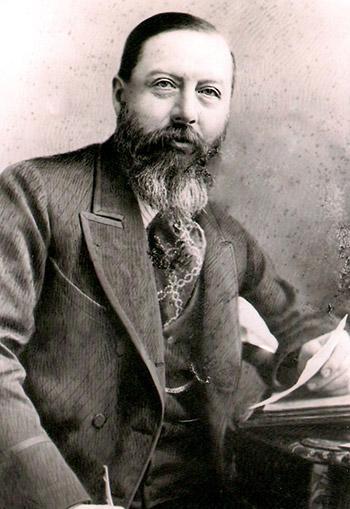
At a meeting on 25th October 1883, the Rev. William Stainton Moses – an Anglican priest and remarkable medium – proposed the foundation of a new society upon the dissolution of the Central Association of Spiritualists. On 20th November 1883, the new London Spiritualist Alliance was named and began its activities early in 1884.
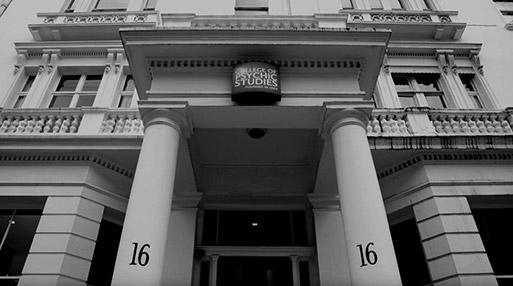
The Alliance resided at several addresses in London before acquiring its spacious townhouse in South Kensington, London in 1925. The purchase price for the freehold of 16 Queensberry Place was £5,000. This was almost exactly the amount raised by a Memorial Endowment Fund, which was started at the end of the First World War at the suggestion of David Gow who was the Editor of the College's journal, Light.
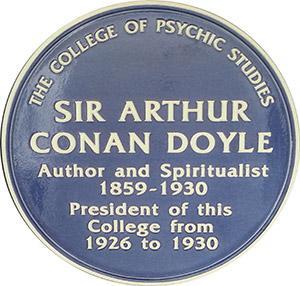
Donations were welcomed from those who, through spiritualism, had received consolation after losing loved ones during the war. The College of Psychic Studies headquarters can therefore be thought of as a memorial, donated as an expression of gratitude by the bereaved. A 'new home' gathering took place on 21 January 1926 under the Presidency of Sir Arthur Conan Doyle, who was tireless in helping the bereaved and spreading the word of spiritualism including urging people to join the Alliance and read the latest news in Light.
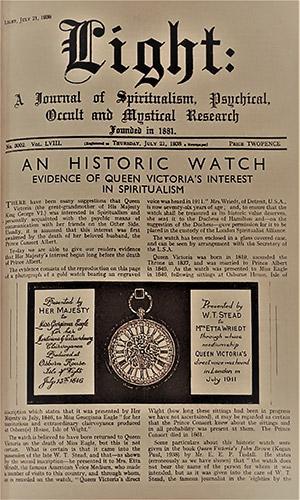
Light, the oldest running psychic journal in the United Kingdom, goes back even further than the College. It first appeared as a weekly on 8th January 1881 and has always been associated with well-known editors and contributors. In the 1940s, its Editor was the Hon. Ralph Shirley, a director of William Rider & Son, the leading publisher of occult books. Other distinguished literary figures on the editorial board have been the authors Constance Sitwell (a former College President), Rosamond Lehmann, CBE and Kathleen Raine, the poet and William Blake scholar.
The Alliance continued to go from strength to strength as a literary hub. Over the decades, it has built up one of the finest collections of specialist esoteric books. This unique library has been used by generations of writers and scholars including Sir Arthur Conan Doyle who published his two volume History of Spiritualism and his novel, The Land of Mist, while he was the College's President. Other notable names are Frank Podmore, who wrote Modern Spiritualism from the library, and Nandor Fodor, who compiled his Encyclopaedia of Psychic Science while he was the assistant editor of Light. More recently, popular authors such as Kate Summerscale have researched their latest books at the College.
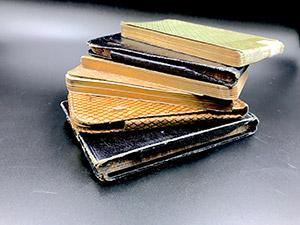
Throughout its history, the College has aimed to foster psychic ability and mediumship at its highest level. It has been host to many of the greatest names in this field. Among the most outstanding was the first President, Rev. William Stainton Moses, whose communications were voluminous and highly regarded. Published as Spirit Teachings and More Spirit Teachings, they went into several editions and are still popular today. His numerous handwritten notebooks of seances and automatic writings are some of the most treasured artefacts in the College archive. He died in 1892 leaving his personal library to the Alliance. A mahogany bookcase was purchased in 1893 for The Stainton Moses Memorial Library, which now stands in the President's Office alongside his portrait.
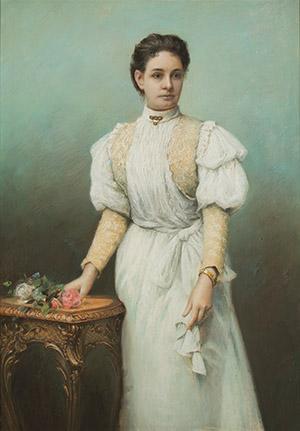
Another outstanding medium was the great Daniel Dunglas Home of levitation fame, whose well-known portrait by the younger Pickersgill hangs in the College's library. Next to it is a bust of the medium J.J. Vango, modelled by J.A. Stevenson and exhibited at the Royal Academy in 1921. There are many more portraits of well-known mediums and other figures associated with the College's history displayed around the building. Among them are the mediums Ivy Northage, who will be remembered for her teaching and pioneering work in the media, as well as Helen Duncan, Alfred Vout Peters, Geraldine Cummins, Madame D'Esperance and Etta Wriedt. The College's close association with scientific pioneers is also represented with portraits of Sir William Crookes, Sir Oliver Lodge, Alfred Russel Wallace and Sir William Barrett. Interest in the science relating to psychic studies was behind the London Spiritualist Alliance changing its name in 1955 to The College of Psychic Science. In 1970, it became The College of Psychic Studies, which is today known the world over as a beacon of light and a place of spiritual development.
Psychical research was also a prominent College activity, particularly in the early days. From 1926-1930, the top floor at the College was leased to psychic investigator Harry Price for his 'National Laboratory of Psychical Research'. The rooms were converted into six lab areas with apparatus, bunsen burners and recording equipment typical of the time. Scientific experiments were conducted in an attempt to prove psychic phenomena and the College became one of the first of its kind in the UK set up to prove consciousness beyond matter, and to test the abilities of mediums and psychics.
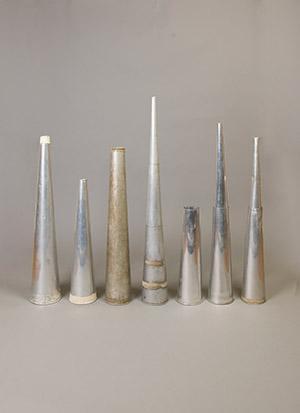
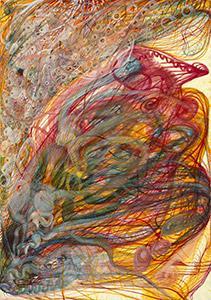
From its long and distinguished history, the College has been fortunate to have amassed an important archive of spiritualist and psychic material. This has been formed almost entirely from donations dating back to 1848 and the very beginning of modern spiritualism. Some rare esoteric books in the library are even older and were published in the 17th and 18th centuries. The archive tells the story of the history of spiritualism and psychic study through its incredible collection of art, photographs, artefacts and ephemera. There are early spirit photographs and ouija boards, spirit trumpets, planchettes and crystal balls that were used in seances. Periodicals, letters and notebooks from the early pioneers give great insight into spiritualistic activities. One of these activities was mediumistic and psychic art that began in the UK in 1856 with Anna Howitt Watts. Georgiana Houghton began her spiritualistic journey shortly after in 1859. Both of these artist mediums were founder members of the College in 1884, which, sadly, was the year they both died. They left an important legacy in their art, which can be seen in the archive and have inspired many spirit artists who have followed in their footsteps.
Psychic studies have come a long way since the College was first formed nearly a century and a half ago. We now run courses, workshops and talks in mediumship training, trance, psychic development, working with your guides and angels, automatic writing, past and future lives, shamanic healing, chakras, energy work, palmistry, numerology, tarot, mysticism, scrying and crystals. We also offer one-to-one healing sessions and psychic mediumship readings. Our work continues and will no doubt embrace new developments in the survival of consciousness beyond matter.
CREDITS
1 Portrait of William Stainton Moses 2 Blue Plaque celebrating Arthur Conan Doyle's association with the College 3 College entrance at 16 Queensberry Place 4 Front cover of Light from 1930s 5 A selection of original notebooks belonging to Stainton Moses in the 1870s 6 Portrait of Madame D'Esperance (artist unknown) 7 Selection of spirit trumpets from the College Archive 8 Spirit Drawing by Georgiana Houghton, 1866