Ethelwynne M. Quail (1903-1947) was a South African artist and sculptor associated with the Theosophical movement. Working across sculpture, drawing, painting and writing, she dedicated her life's work to exploring realities beyond ordinary perception. Entirely self-taught, she developed a distinctive visual language inspired by nature, mythology and esoteric philosophy, seeking to make visible the forces she believed shaped the natural world.
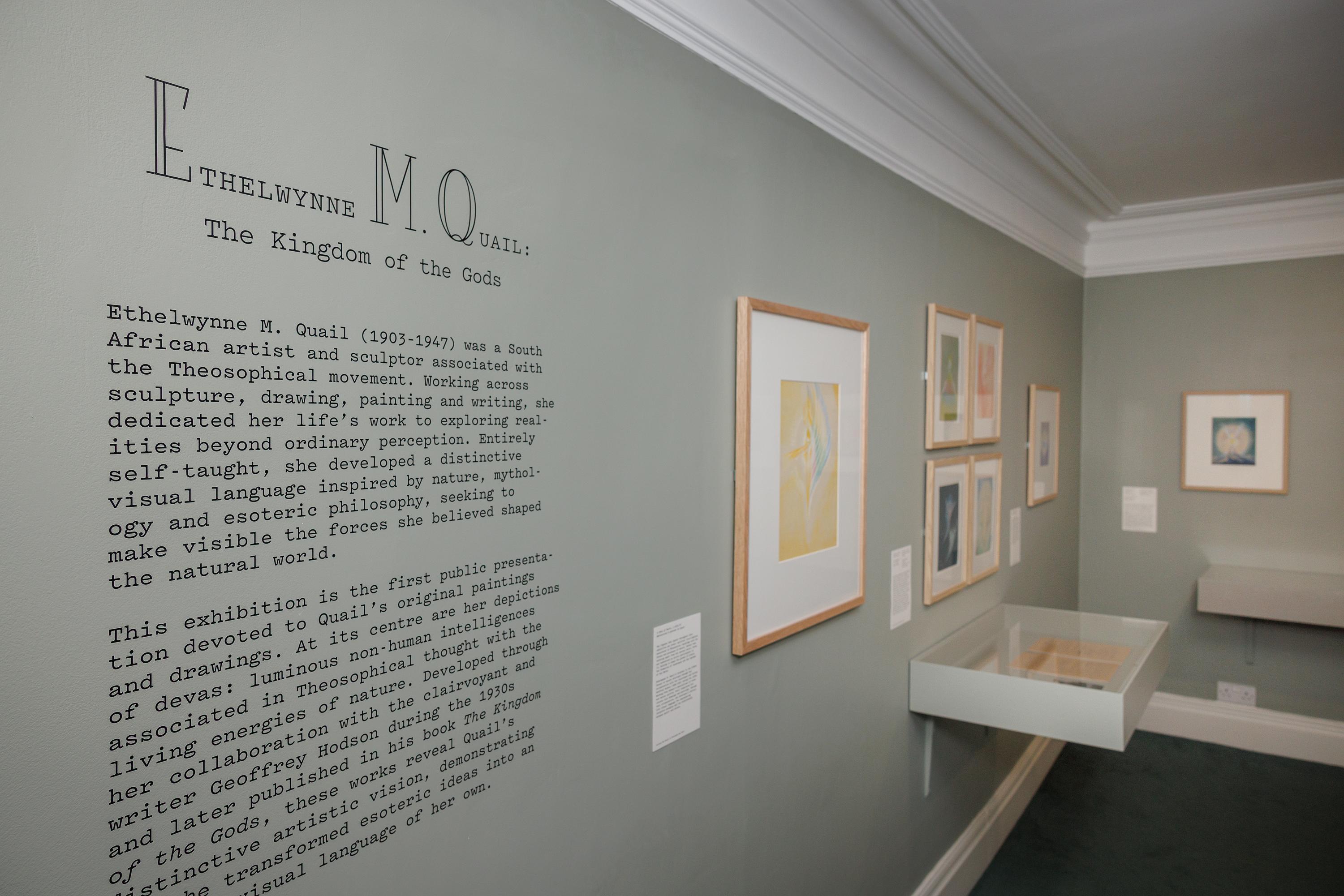
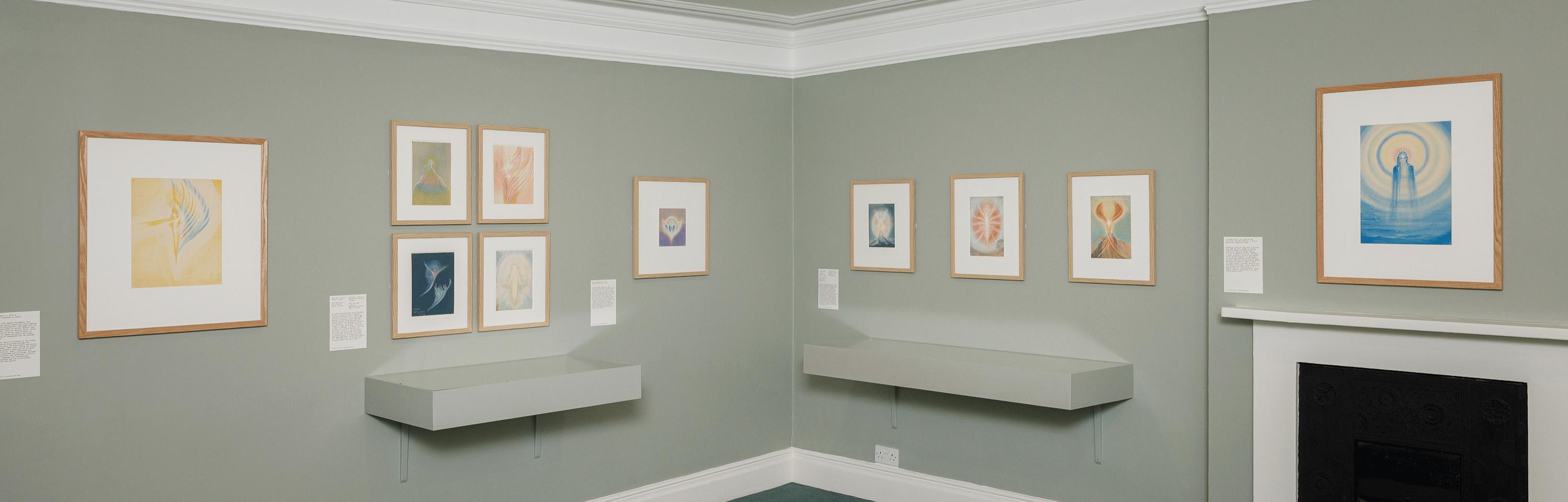
This exhibition at The College of Psychic Studies is the first public presentation devoted to Quail's original paintings and drawings. At its centre are her remarkable depictions of devas, luminous non-human intelligences associated in Theosophical thought with the living energies of nature. Developed through her collaboration with the clairvoyant and writer Geoffrey Hodson during the 1930s and later published in his book The Kingdom of the Gods, these works demonstrate Quail's ability to translate visionary experiences into compelling visual form. The exhibition repositions her as an artist and innovator in her own right.
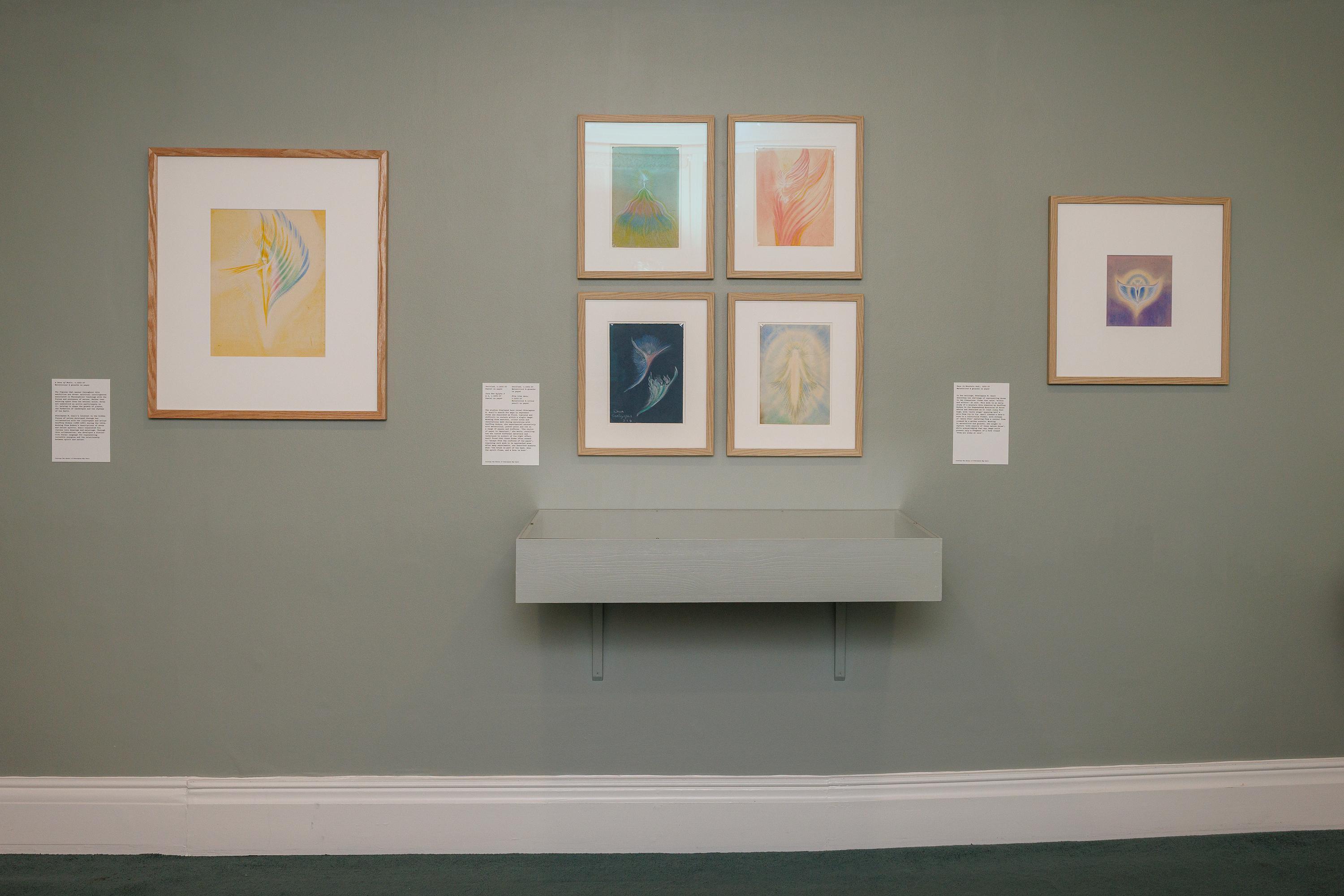
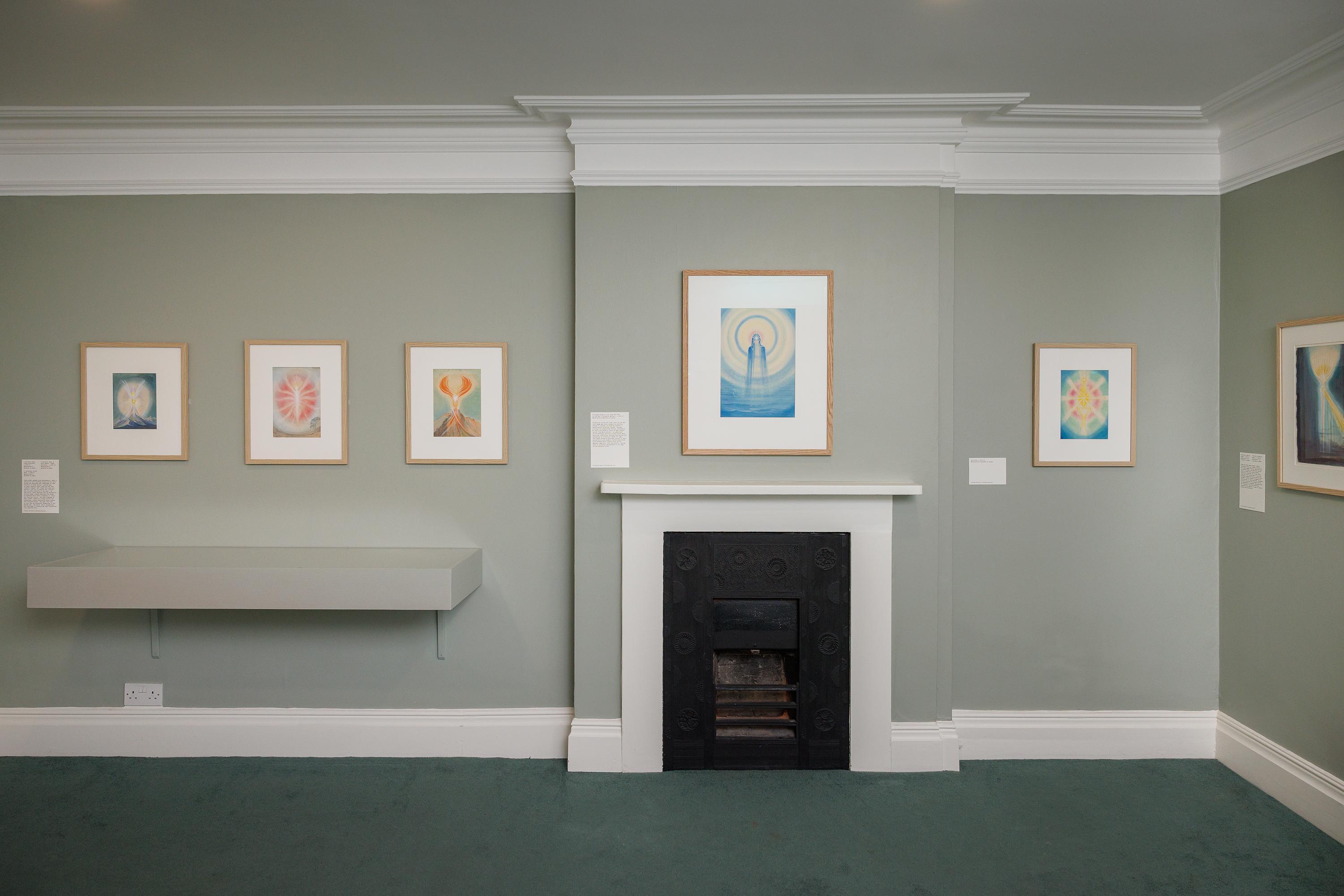
Above left: A Deva of Music, c.1935-37
Watercolour & gouache on paper
The figures that appear throughout this exhibition are devas, spiritual intelligences associated in Theosophical teachings with the forces and processes of nature. Rather than existing apart from the natural world, devas are understood as active participants in it, helping to shape the growth of plants, the formation of landscapes and the rhythms of the Earth.
Quail's interest in the hidden forces of nature developed further through her collaboration with the clairvoyant and writer Geoffrey Hodson (1886-–1983) during the 1930s. Working from Hodson's descriptions of devas and nature spirits, Quail translated his visions into drawings and paintings. Through this collaboration, she developed a distinctive visual language for representing invisible energies and the relationship between spirit and nature.
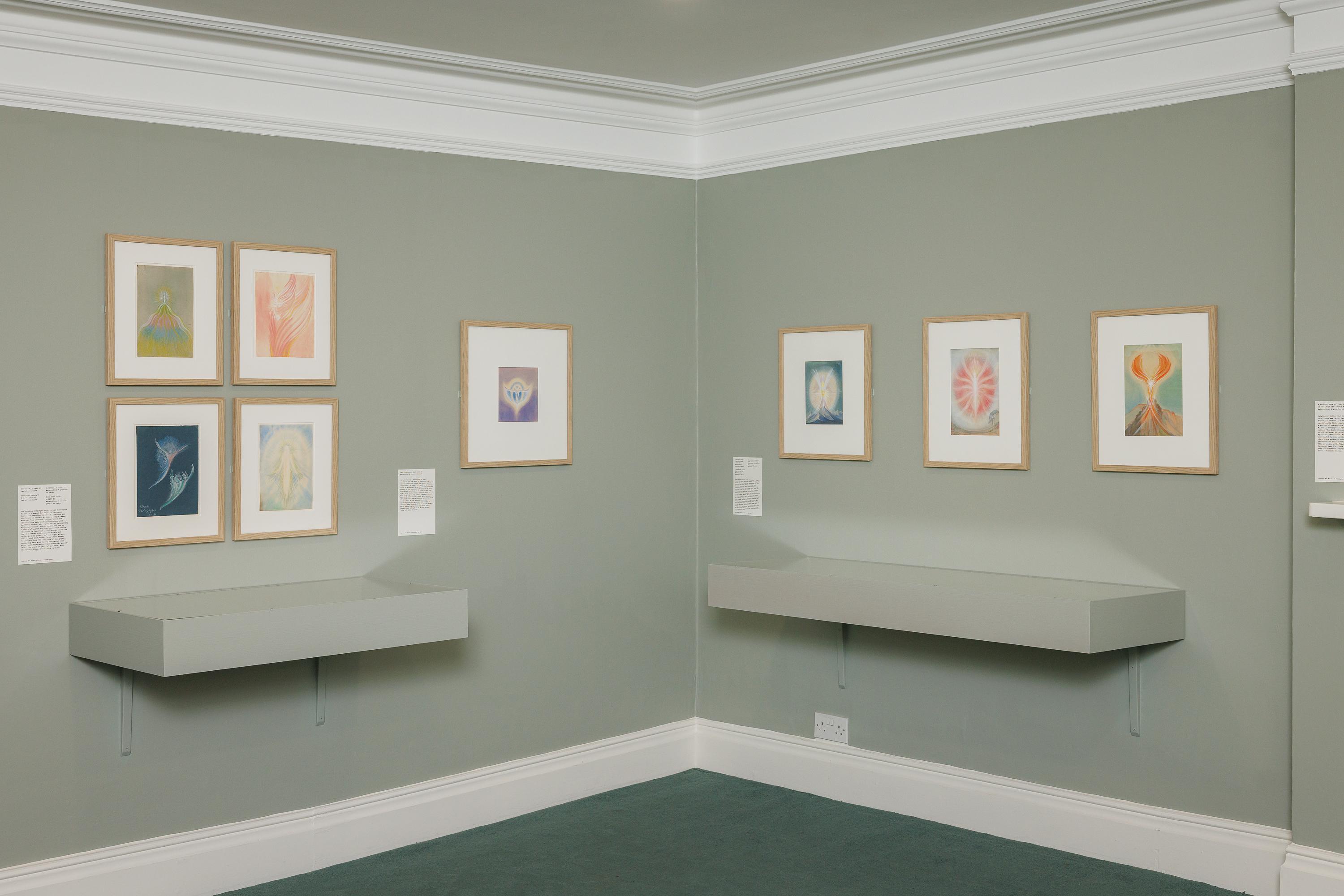
Group of four, clockwise from top left:
Untitled, c.1935-37
Pastel on paper
Untitled, c.1935-37
Watercolour & gouache on paper
Pine tree deva, c.1935-37
Watercolour & colour pencil on paper
Java Sea Sylphs 3 & 4, c. 1935-37
Pastel on paper
The studies displayed here reveal Ethelwynne M. Quail's search for ways to represent forms she described as fluid, luminous and difficult to contain within a single image. Working from sketches, colour notes and observations made during excursions with Geoffrey Hodson, she experimented extensively with watercolour, poster paint and ink on a range of papers and surfaces. 'The choice of paper is important,' she wrote, recalling how she tested different materials and techniques in pursuit of the right effect. Quail found that these forms often seemed to 'escape from the confines of the paper', requiring each work to be approached anew. After many experiments, she described moments when 'the brush is part of the hand, when the spirit flows, and a Deva is born'.
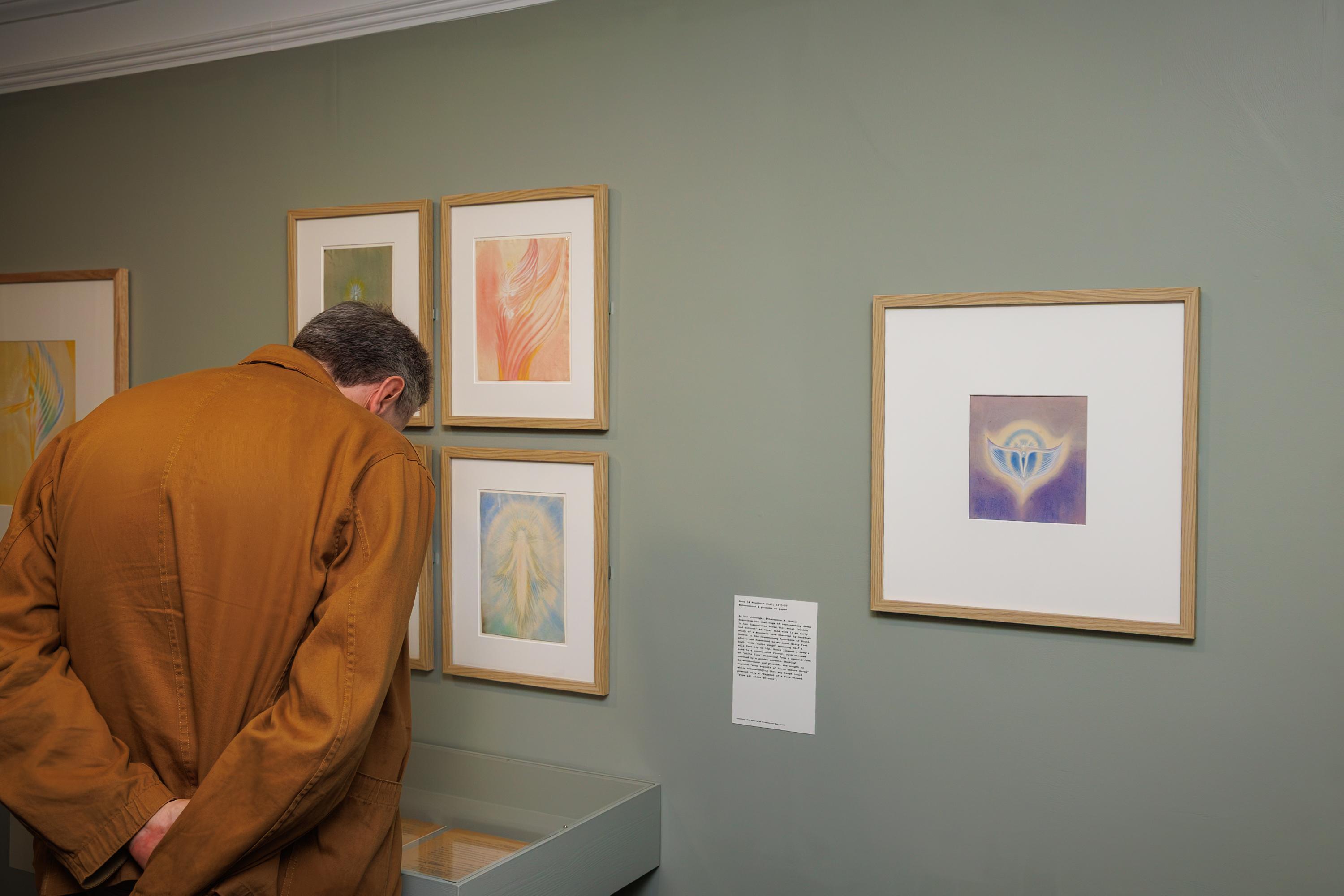
Above right: Deva (A Mountain God), 1935-37
Watercolour & gouache on paper
In her writings, Quail describes the challenge of representing devas in two dimensions: forms that exist 'within and without' at once. This work is an early study of a mountain deva observed by Geoffrey Hodson in the Drakensberg Mountains of South Africa and described as at least sixty feet high, with 'auric wings' spanning half a mile from tip to tip. Quail likened a deva's aura to a convolvulus flower, with streams of 'white fire' radiating from a central form crowned by a golden aureole. Working in watercolour and gouache, she sought to capture 'some aspects of these nature devas', while acknowledging that any image could present only a fragment of a form viewed 'from all sides at once'.
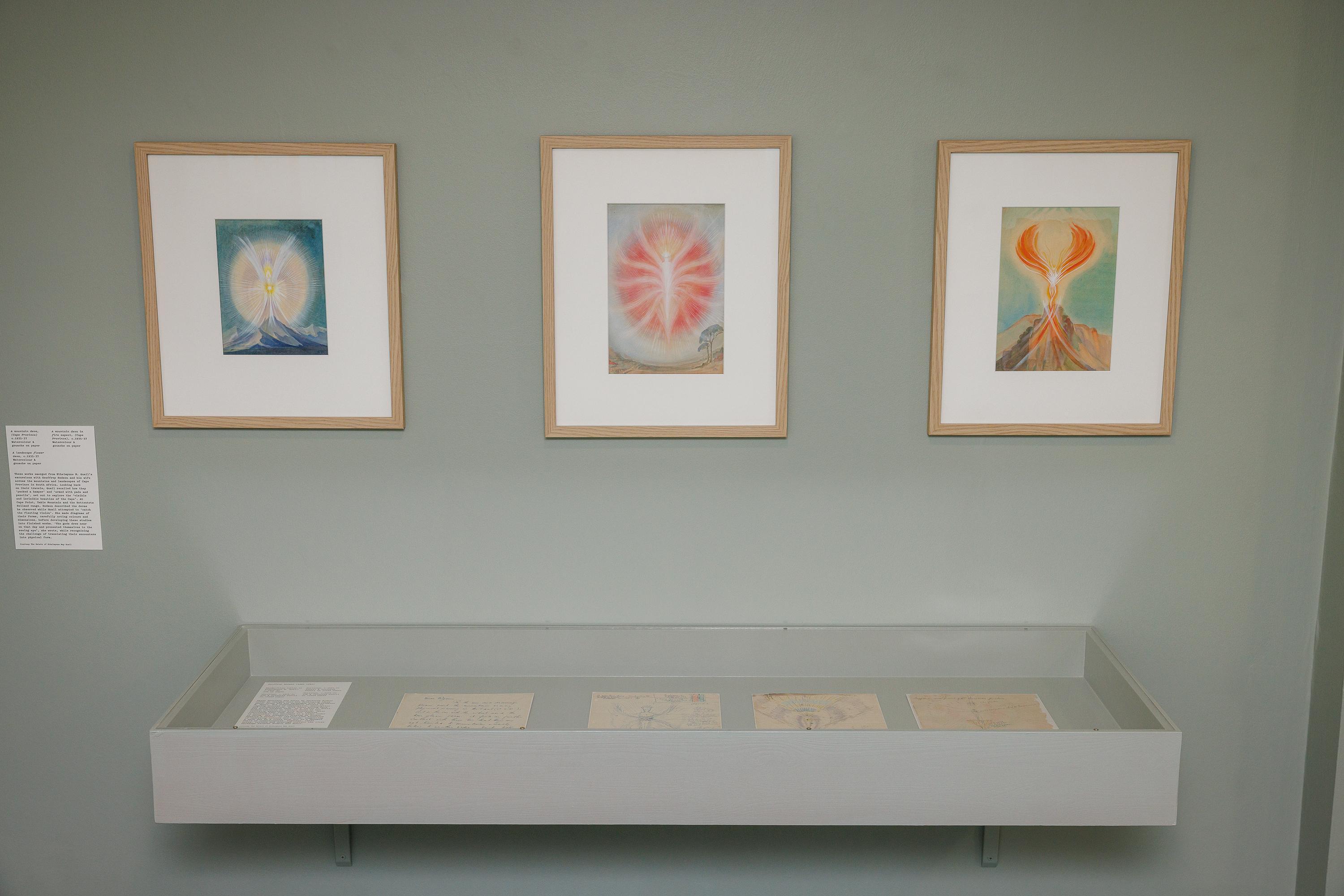
From left: A mountain deva (Cape Province)
c.1935-37, watercolour and gouache on paper
A landscape flower deva
c.1935-37, watercolour and gouache on paper
A mountain deva in fire aspect
c.1935-37, watercolour and gouache on paper
These works emerged from Quail's excursions with Hodson and his wife across the mountains and landscapes of the Cape Province in South Africa. Looking back on their travels, Quail recalled how they 'packed a hamper' and 'armed with pads and pencils', set out to explore the 'visible and invisible beauties of the Cape'. At Cape Point, Table Mountain and the Hottentots Holland range, Hodson described the devas he observed while Quail attempted to 'catch the fleeting vision'. She made diagrams of their forms, carefully noting colours and dimensions, before developing these studies into finished works. 'The gods drew near on that day and presented themselves to the seeing eye', she wrote, while recognising the challenge of translating their encounters into physical form.
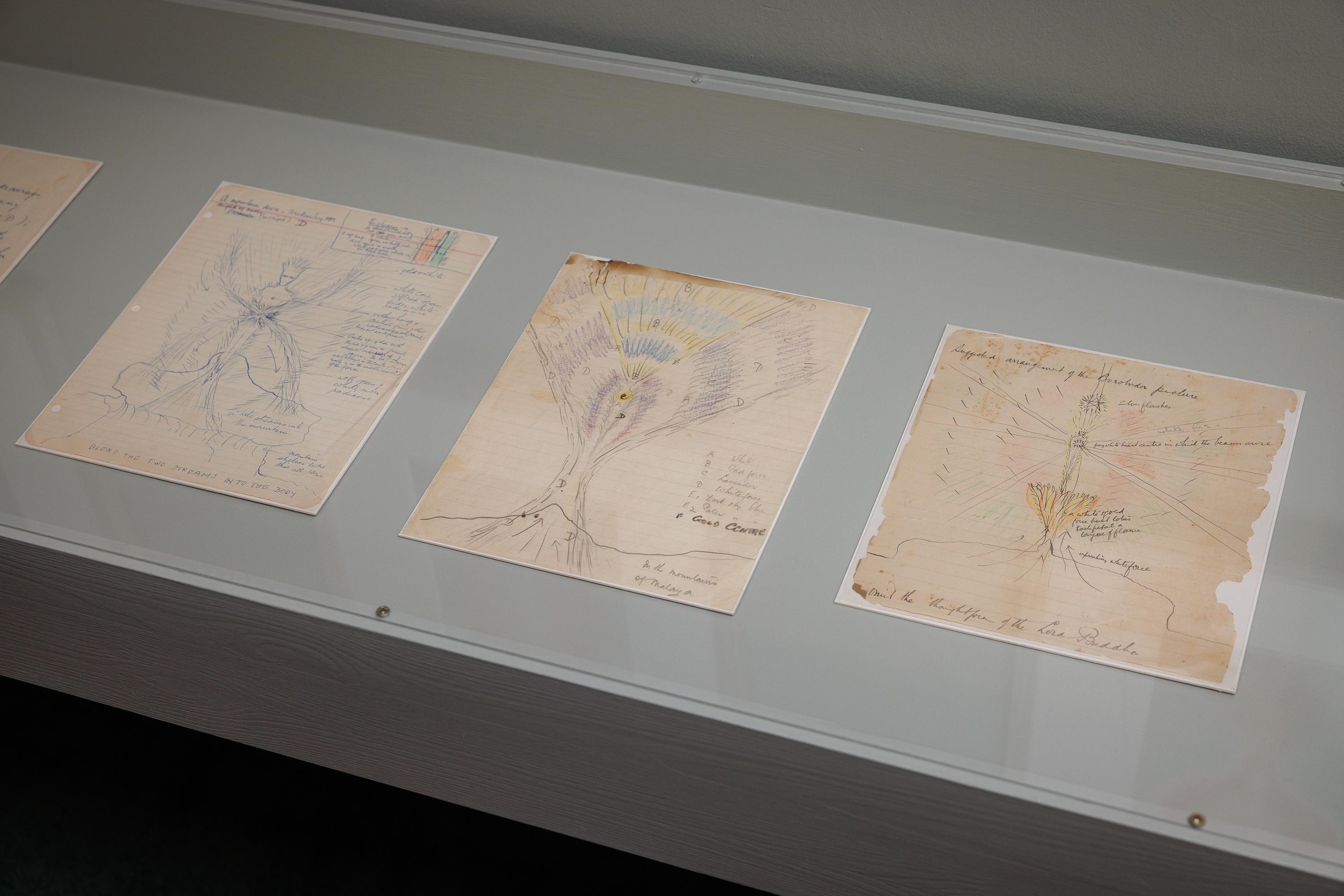
Vitrine, from left: Untitled, c.1935-37
Pen & coloured pencil on lined paper.
Untitled, c.1935-37
Pencil & coloured pencil on lined paper
Untitled, c.1935-37
Ink & coloured pencil on lined paper
These sketches and notes by Hodson offer an insight into his developing ideas about devas and his exchanges with Quail. Their correspondence reveals an ongoing process of observation, description and interpretation, with ideas moving back and forth between them. In a letter to Quail, Hodson reflects on certain devas he had initially associated with mountains, later concluding that they were 'not limited to mountains' but belonged to a wider order of being. One schematic drawing by Hodson depicts a funnel- or chalice-like structure of radiating colours and forces, suggesting a deva not as a fixed body but as a dynamic field of consciousness. Together, these notes, letters and drawings reflect the close exchange between Hodson and Quail.
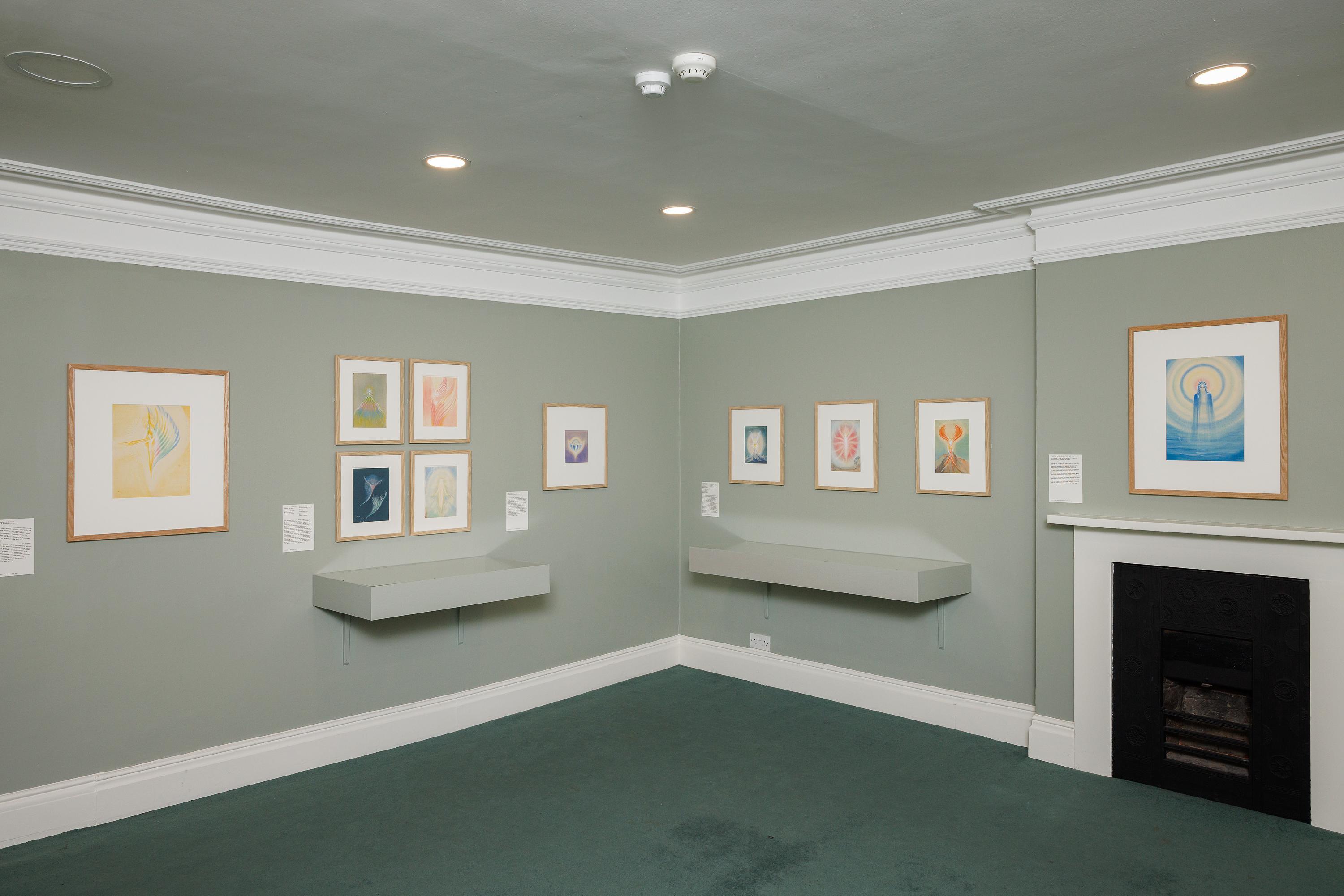
Above right: A thought form of 'Our Lady The Star of the Sea' (The World Mother), c.1935-37
Watercolour and gouache on paper
Originally titled Our Lady, Star of the Sea, this image was later renamed by Geoffrey Hodson to broaden its meaning beyond a specifically Christian context. Through a series of preparatory studies, Quail developed a vision of what Hodson called 'The World Mother', an embodiment of the maternal principle found across many spiritual traditions. Rising from the sea and surrounded by concentric bands of light, the figure evokes a universal source of care, preservation and renewal. Hodson associated this presence with figures such as the Madonna, Kwan Yin, Isis and Parvati, seeing them as different expressions of the same divine feminine force.
Above right: Untitled, c.1935-37
Watercolour and gouache on paper
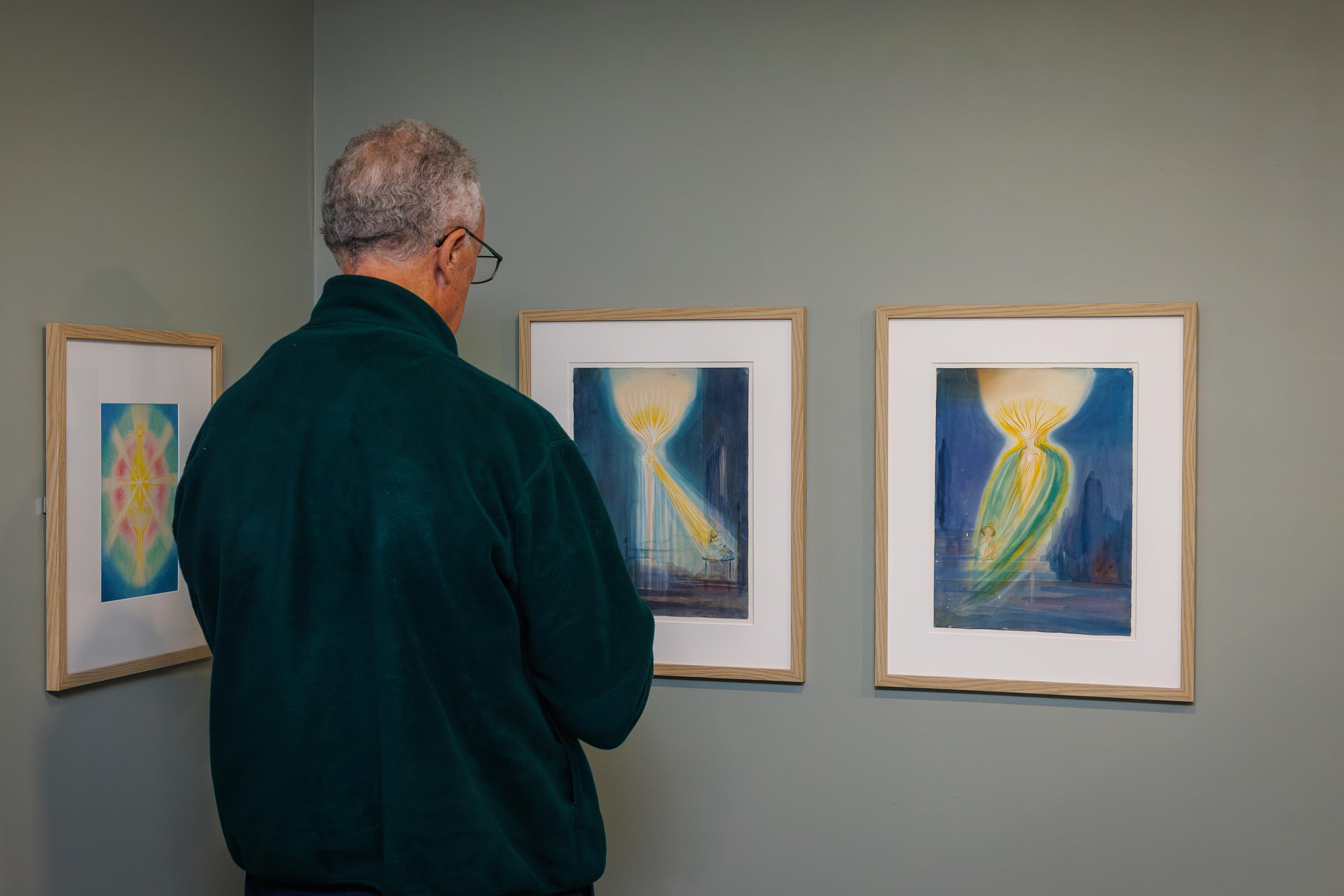
Above right: Untitled (A Healing Angel), c.1935-37
Watercolour, ink & gouache on paper
Untitled (A Healing Angel), c.1935-37
Watercolour, ink & gouache on paper
These two works depict angelic figures attending a child and a person confined to bed. Their imagery reflects ideas developed by Geoffrey Hodson, who described healing angels as beings that restore harmony, vitality and spiritual well-being. Hodson wrote that they envelop those in need with purifying energies and divine healing power, helping to restore balance throughout the body and mind. In these paintings, Quail visualises such beings as active and compassionate presences. Gathered around the vulnerable, they offer protection, reassurance and comfort in times of illness, weakness and uncertainty.
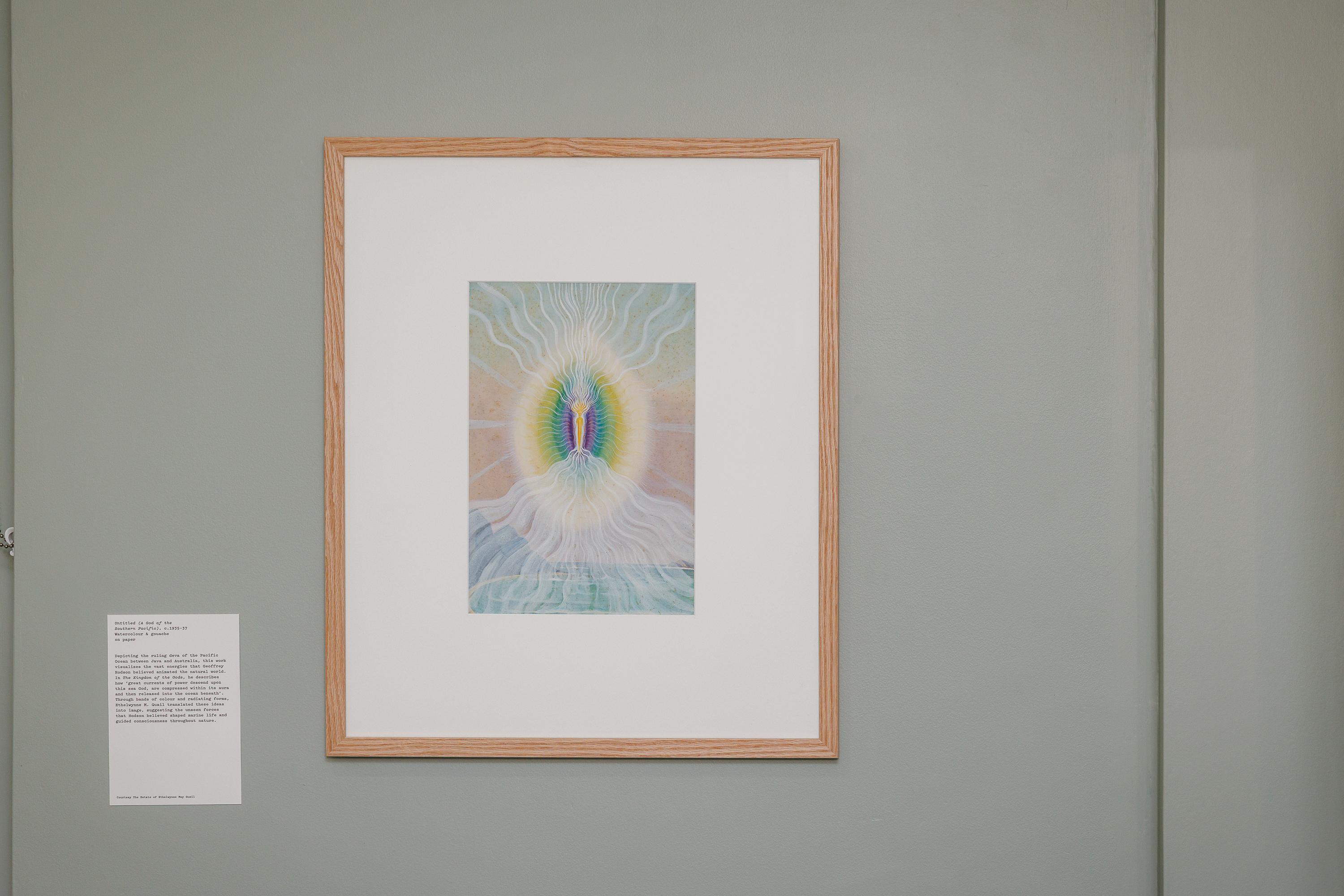
Untitled (A God of the Southern Pacific), c.1935-37
Watercolour & gouache on paper
Depicting the ruling deva of the Pacific Ocean between Java and Australia, this work visualises the vast energies that Geoffrey Hodson believed animated the natural world. In The Kingdom of the Gods, he describes how 'great currents of power descend upon this sea God, are compressed within its aura and then released into the ocean beneath'. Through bands of colour and radiating forms, Quail translated these ideas into image, suggesting the unseen forces that Hodson believed shaped marine life and guided consciousness throughout nature.
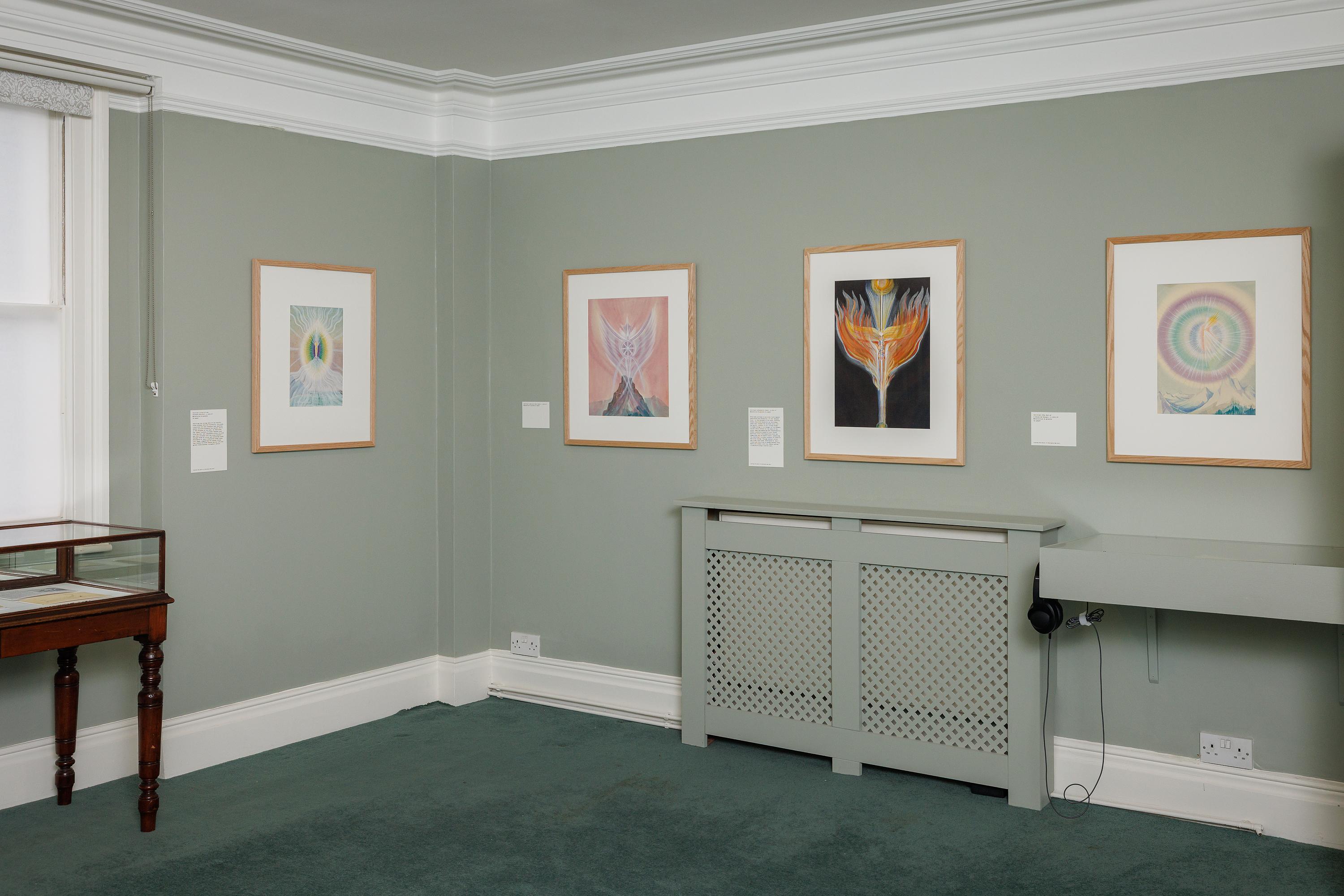
From left: Untitled (A God of the Southern Pacific), c.1935-37
Watercolour & gouache on paper
Untitled, (A Mountain God, Natal), c.1935-37
Watercolour & gouache on pape
Untitled (A Kundalini Deva), c.1935-37
Watercolour & gouache on paper
Untitled (The God of a Snowclad Range), c.1935-37
Watercolour & gouache on paper
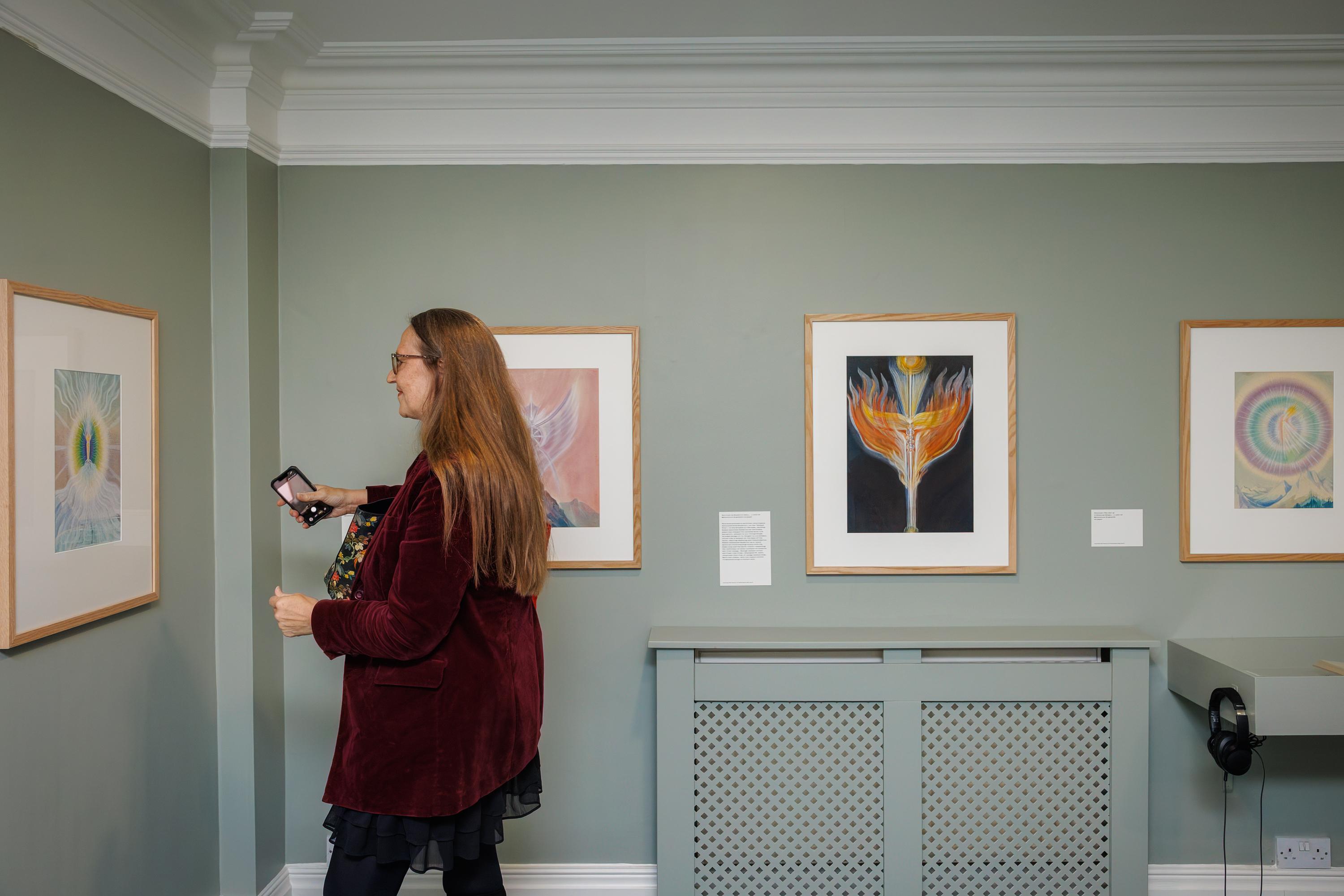
Above centre: Untitled (A Kundalini Deva), c.1935-37
Watercolour & gouache on paper
This work portrays a spiritual intelligence associated with Kundalini, or the 'Serpent Fire'. In The Kingdom of the Gods, Geoffrey Hodson describes Kundalini as the hidden power that charges the universe with life and spirit, present in all living things. In human beings it is thought to lie dormant, coiled like a serpent at the base of the spine, awaiting awakening and transformation. Hodson understood Kundalini as a latent spiritual force residing within both the human body and the Earth itself, connecting the individual to wider currents of creative and vital energy. Through radiant colour and flame-like forms, Quail visualises this flow of energy between body, Earth and cosmos, with the chakra centres illuminated along a central axis.
Published five years after Quail's death, The Kingdom of the Gods (1952) reproduces the paintings Ethelwynne M. Quail created in collaboration with Geoffrey Hodson during the 1930s. Dedicated to Quail, the book introduced her work to an international audience and remains a landmark publication within twentieth-century Theosophy. Hodson later reflected on their partnership:
'An artist was needed... someone who could collaborate with me in depicting these great beings on canvas. And then another kind of miracle took place. Ethelwynne Quail, the artist, offered collaboration.'
Artworks and archival materials courtesy The Estate of Ethelwynne May Quail. Photographs: Dan Weill
Visit the free exhibition: