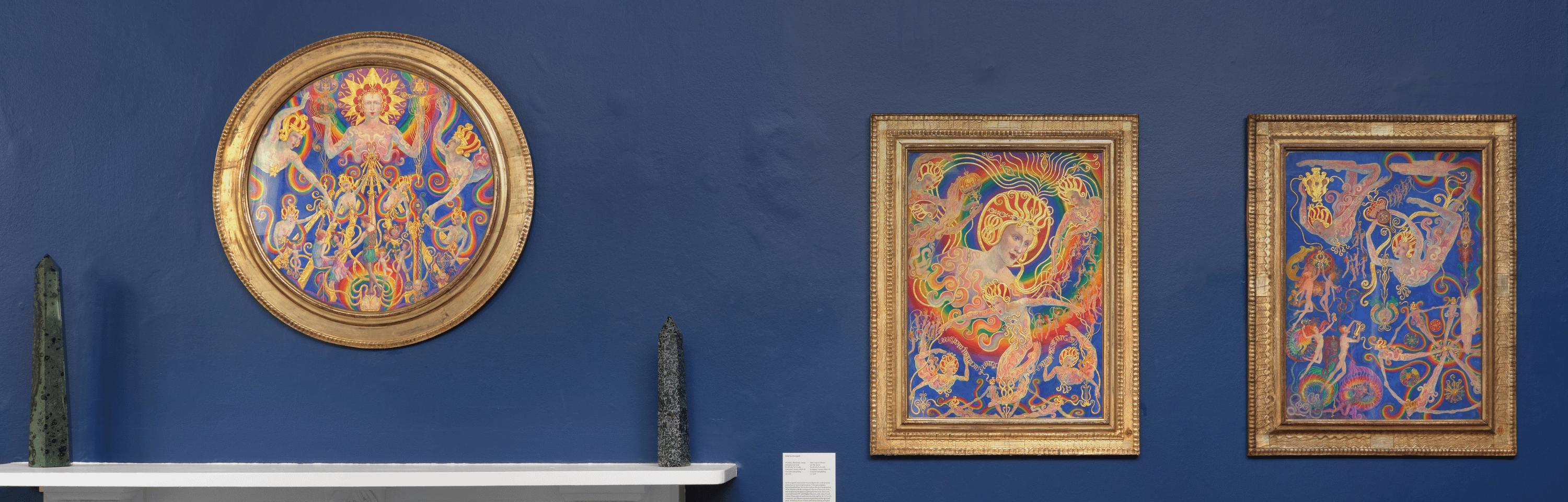
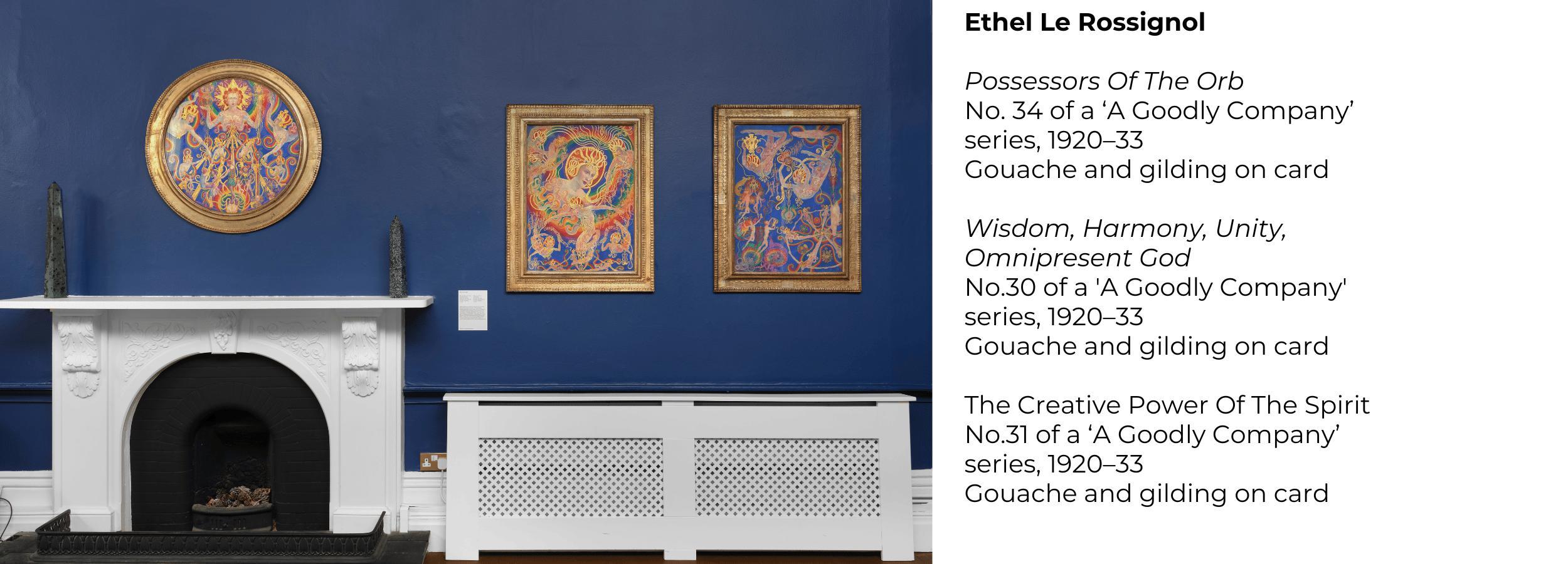
Ethel Le Rossignol (1873–1970) was a trained artist and gifted painting medium who, under the guidance of a spirit known as J.P.F., created the series A Goodly Company (1920–33). Describing these works as transmissions from advanced spiritual beings, she claimed not to be their sole author. Each painting is accompanied by teachings from higher masters that offer insight into the symbolic meanings embedded within the images. Rich in swirling colour and symbolic form, these luminous works were intended as an assurance of life after death and a testament to the beauty and wisdom of the spirit world. Le Rossignol first exhibited the series at The College of Psychic Studies in the 1920s and donated it to the College's collection in 1968. This display features two recently rediscovered pencil drawings by Le Rossignol, newly acquired by the College, which offer fresh insight into her visionary practice.
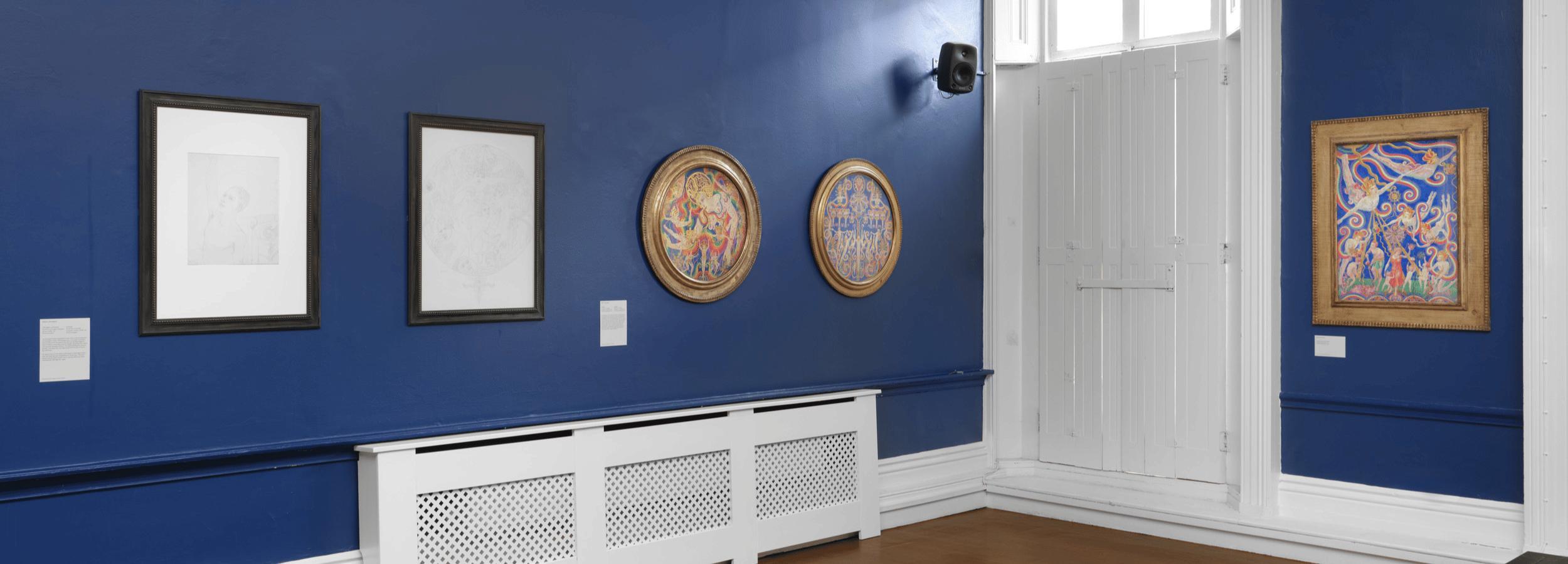
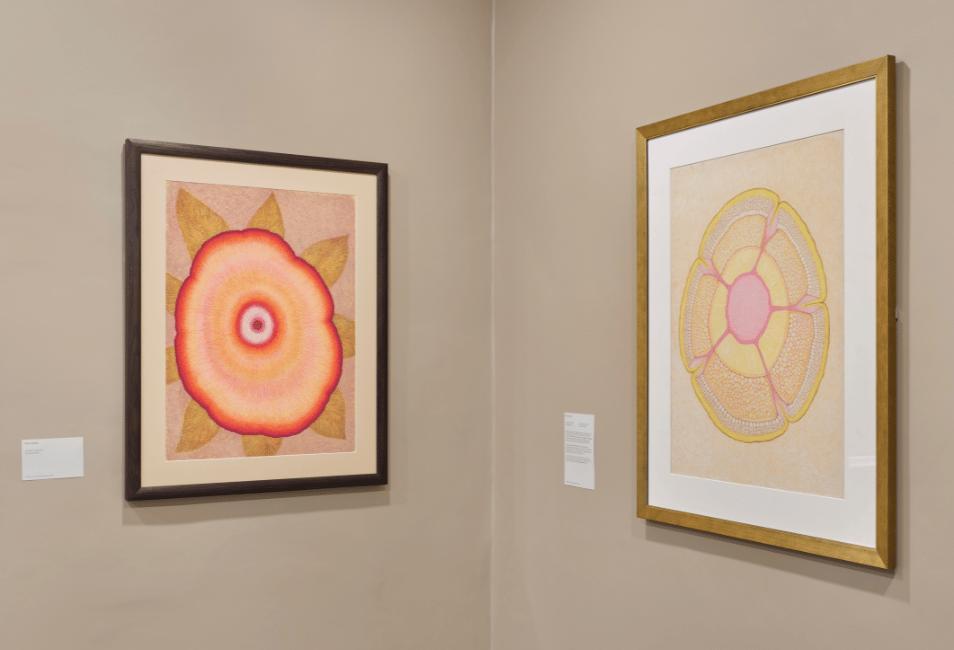
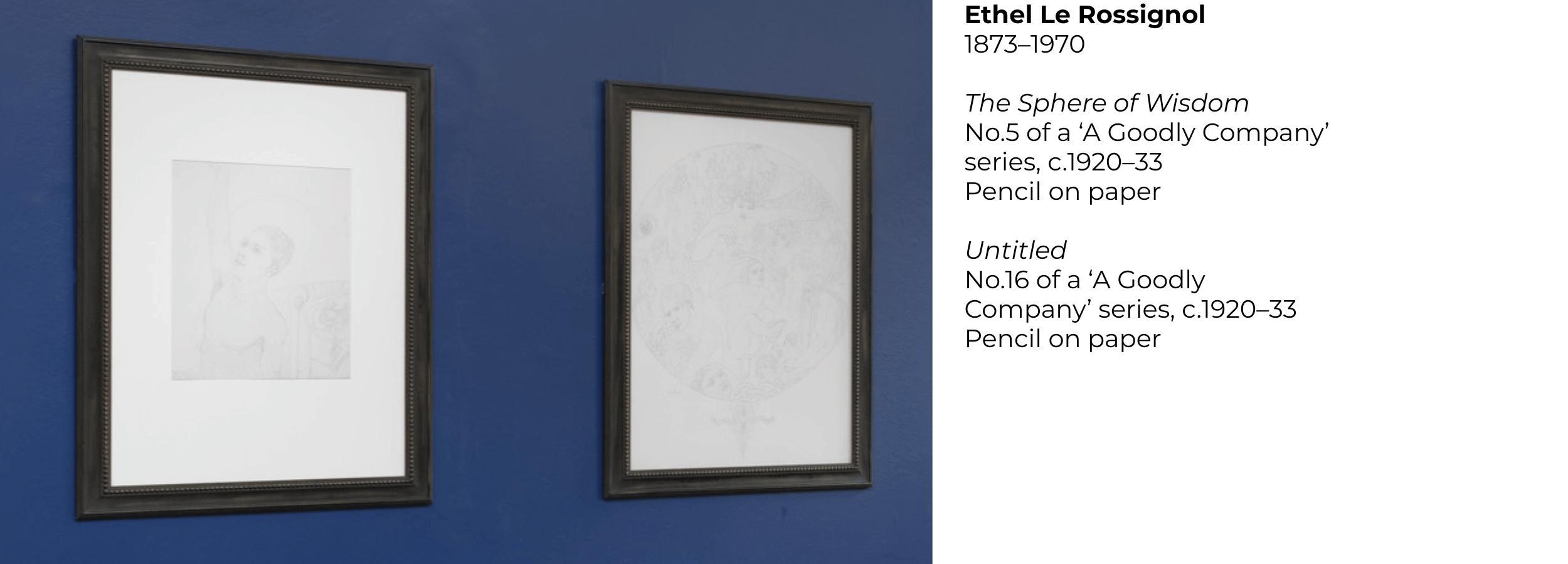
Le Rossignol's first channelled works were created using pencil and paper. In her 1933 publication, 'A Goodly Company', she recounts how the pencil that she was holding began to move without conscious control, rapidly sketching the outline of a recently deceased friend. The spirit guiding her, known as J.P.F., revealed that 'having passed the barriers of death, he still lived.' At the bottom of The Sphere of Wisdom, Le Rossignol notes that the drawing was completed over three days. The first session lasted nearly twelve hours, during which she drew continuously through the night.
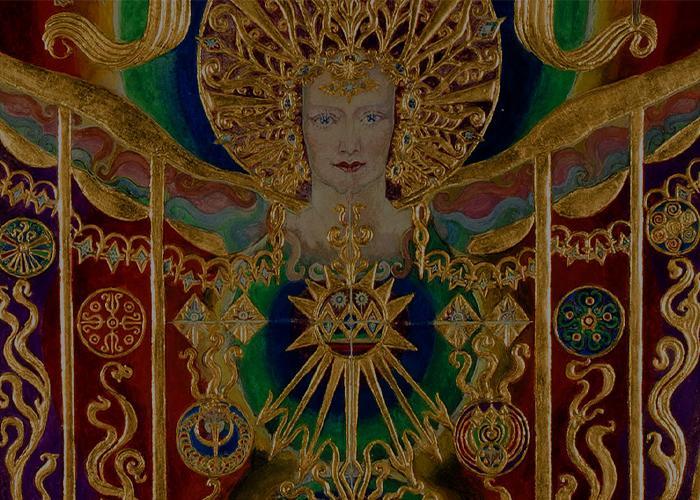
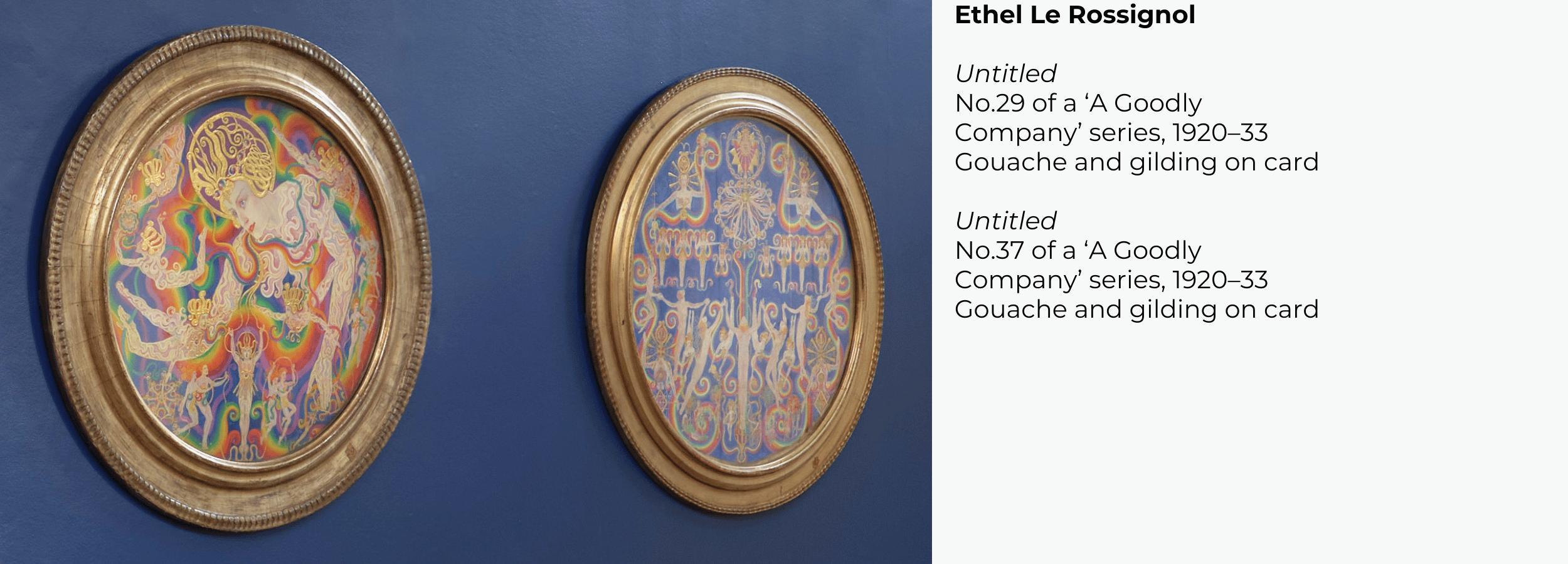
Le Rossignol's earliest works were made using pencil, but as her mediumistic practice evolved, she incorporated gouache and gilding to create vibrant and radiant compositions. The worlds depicted were described by her guide J.P.F. as a subtle, luminous plane close to the physical world, composed of finer substance and inhabited by beings of light. Untitled, No.37 features a radiant twelve-pointed star symbolising Christ as the Fountain of Life—'Leader and Guide in this and other spheres.' Other symbols within the work explore the unification of male and female energies, expressing ideas of perfect harmony and spiritual balance.
Le Rossignol's channelled visions depict the soul's journey toward unity and enlightenment. Through complex, layered symbolism, her works explore the guiding presence of the Master and the emergence of power, harmony, love, and wisdom on the path to spiritual wholeness. Her texts, received from J.P.F. and Higher Masters, echo ideas found within Theosophical and esoteric philosophies. In 'A Goodly Company', the Master appears as guardian of the spiritual path, revealing divine wisdom and the unfolding of higher virtues. Central to these works is the 'Rose of Unity', a symbol of spiritual growth and the soul's ongoing awakening.
A Goodly Company
This selection of works by contemporary artists Ann Churchill, Victoria Rance, and Ariela Widzer is presented in dialogue with the visionary art of Ethel Le Rossignol. Together, they explore the boundaries between visible and invisible worlds, off ering visualisations of energetic forces, otherworldly beings, and the potential existence of unseen realms. The title A Goodly Company is drawn from Le Rossignol's self-published book of 1933, comprised of a series of psychic drawings and paintings accompanied by channelled written explanations. Conceived as an assurance of life aft er death, the book stands as a testament to the presence of spiritual forces beyond the material world.
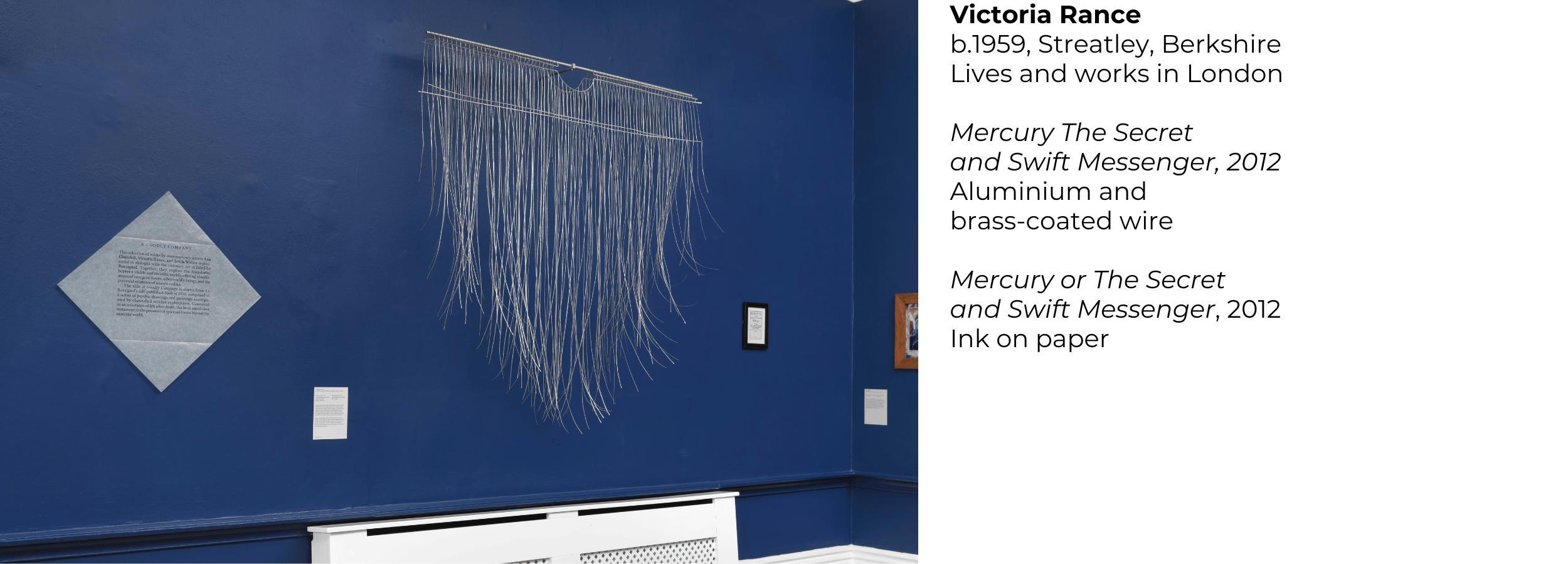
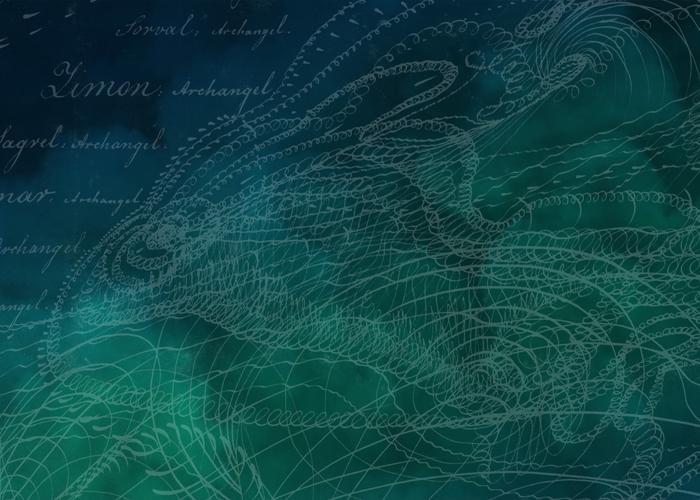
Victoria Rance's Swift Messenger draws inspiration from John Wilkins' 1641 treatise Mercury: or, the secret and swift messenger, which explores methods of transmitting information—including magical and telepathic means. Wilkins speculates on angelic communication, noting that angels, being immaterial, 'hear, and know, and speak, not with several parts, but with their whole Substance.'
Rance merges Wilkins' vision with the mythic figure of Mercury, messenger of the gods and psychopomp (or soul guide), and the futuristic teleportation of Star Trek. The result is a symbolic, wearable sculpture that explores ways to travel and communicate at speed across time and multi-dimensional space.
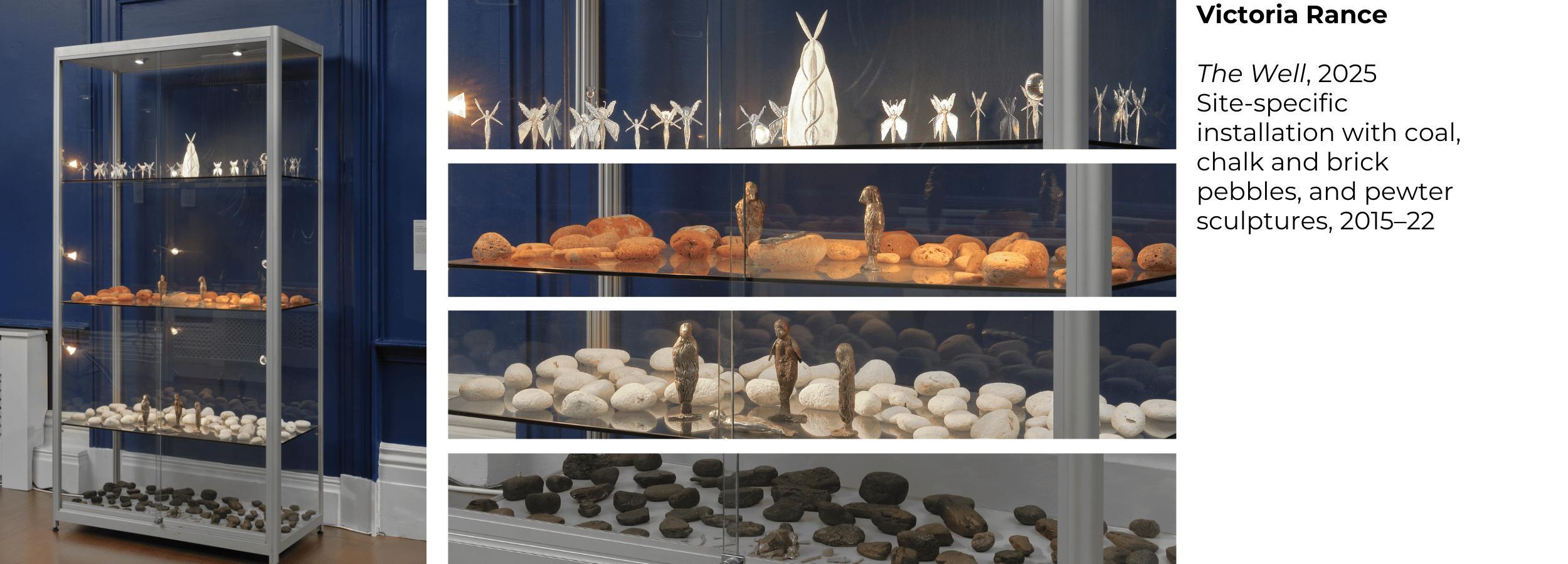
Victoria Rance's multidisciplinary practice spans sculpture, film, and installation, often featuring mythical beings in symbolic, dreamlike worlds. This site-specific work explores the layered realms of mind, body, and spirit through the story of Mother Holle—a supernatural figure who dwells beyond the earthly world, traditionally reached by falling down a well. Associated with transformation, nature, and moral reckoning, Mother Holle rewards kindness and punishes cruelty. The journey begins in the dark, damp dwelling of the toad, ascending through chalk and brick pebbles gathered from the River Thames, and culminates in heavenly realms filled with angelic and goddess-like figures.
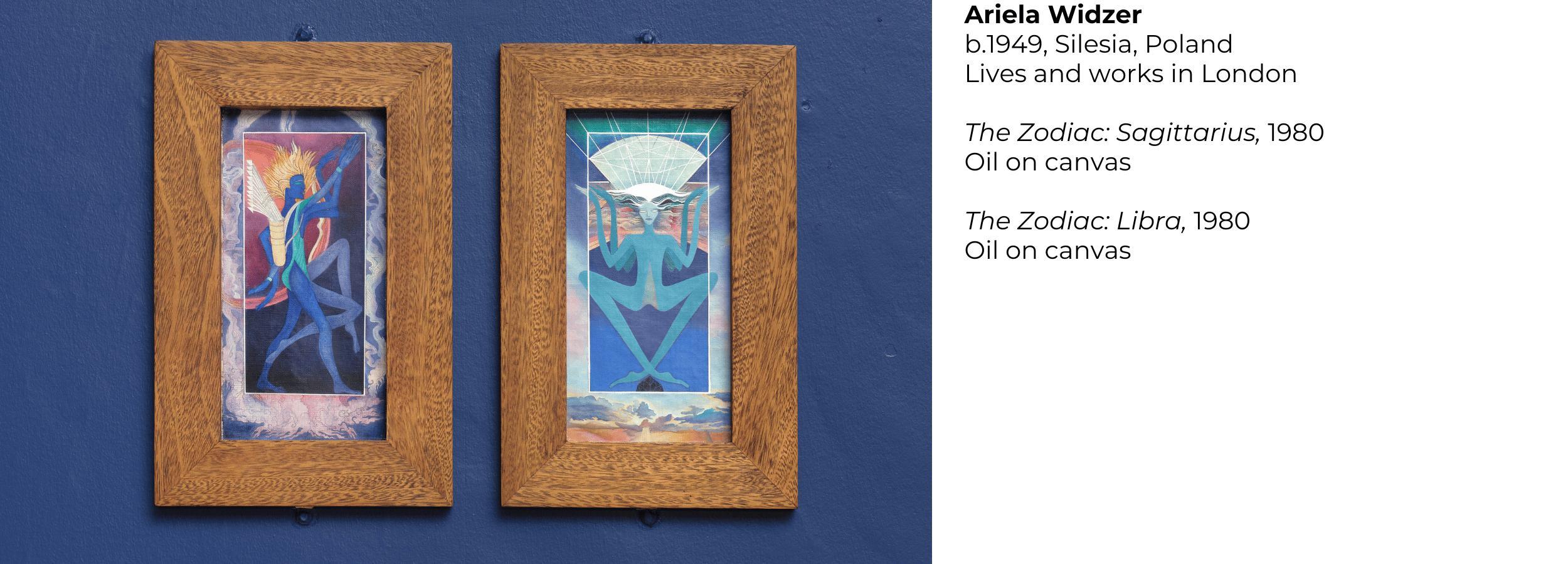
The early work of Ariela Widzer was influenced by the psychedelic and pop aesthetics that defined the late 1960s and 70s counterculture. Her time in London—immersed in music, clubs, and magazines like Oz—shaped her artistic practice. These two pieces, part of her '12 Works of the Zodiac' series, depict Sagittarius as the archer and the balance of Libra. Androgynous, many limbed beings are suspended in multi-dimensional spaces, their movements appearing to unfold across multiple realities.
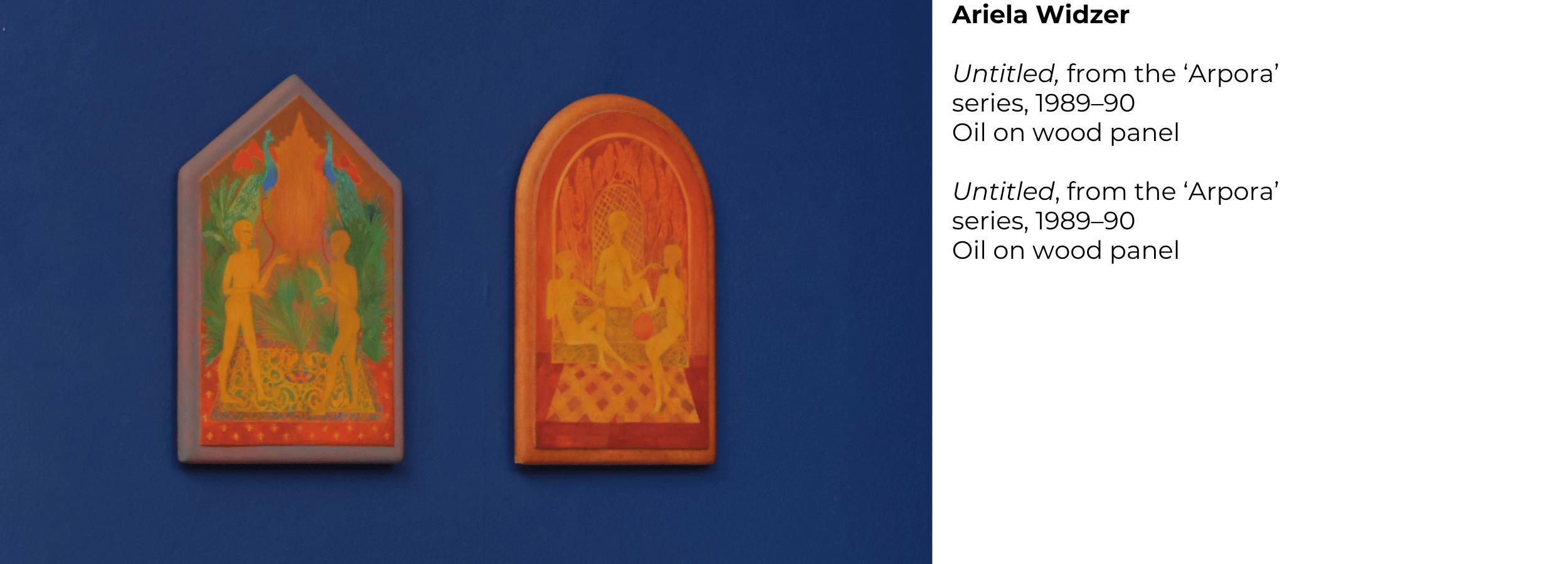
The works of Ariela Widzer explore esoteric ideas and the potential of unseen realities, spanning from early pieces in the 1970s to her current practice. These two panel works explore communication with unearthly beings, echoing the visionary art of Ethel Le Rossignol. Widzer's androgynous figures move through layered dimensions, appearing engaged in play within richly decorated, multi-patterned environments. In one, twin peacocks—symbols of enlightenment in Buddhism and immortality in Christianity—suggest spiritual transformation.
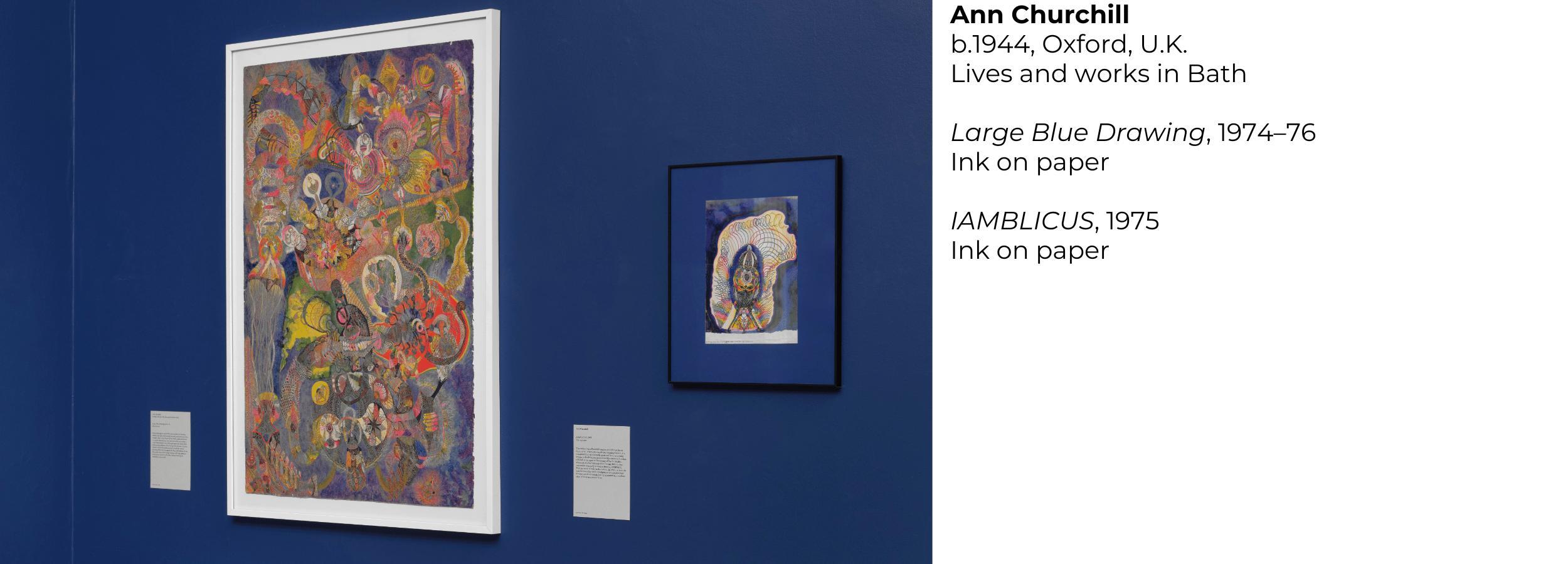
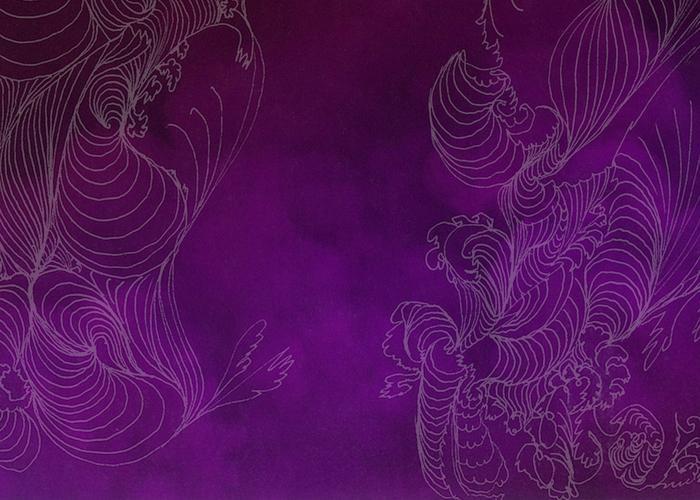
Created during the mid-1970s, the intricate ink Large Blue Drawing reflects Ann Churchill's deeply personal, meditative practice rooted in daily ritual. Since the late 1960s, daily meditation—to quiet the analytical mind and access the unconscious—has been central to her self-taught approach. Made while raising young children, often during brief moments of quiet, vibrant works such as this emerged intuitively, without planning. Filled with energetic, swirling, labyrinthine forms, they guide the eye from shape to shape, offering a glimpse into a quiet, interior world where life and making are intimately intertwined.
The works of Ann Churchill visualise a belief in an Earth that is alive—where all living things, including humans, are connected by a vital energetic spirit and force. As a young woman in the 1960s, she encountered the visionary drawings of Ethel Le Rossignol at The College of Psychic Studies, whose use of colour and depiction of energy left a lasting impression. This early automatic drawing, IAMBICUS, from her series of daily works made in the 1970s, reflects the links between Churchill's developing artistic practice and her spiritual development. Emerging intuitively, it explores ideas of desire as a cosmic force.
All photos: Eva Herzog. Artworks courtesy of the artists & collection of The College of Psychic Studies.
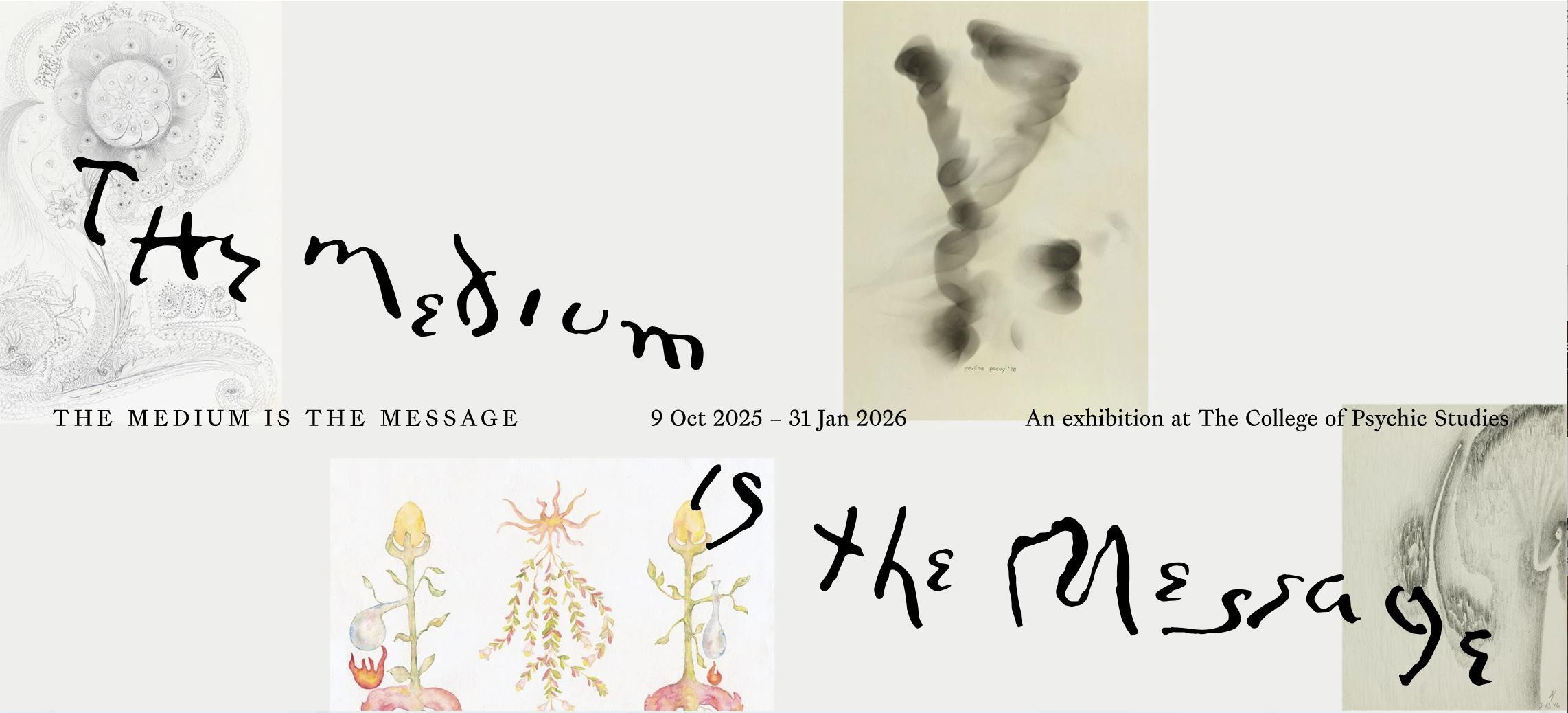
The Medium is the Message, 9 October 2025 –31st January 2026, was a major exhibition that explores the rich and complex relationship between artistic practice and mediumship.
Marking the centenary of The College of Psychic Studies' move to its historic home at 16 Queensberry Place in 1925, the exhibition spanned four floors and featured over 100 artworks alongside rare archival materials. It brought together more than 30 artists from the mid-19th century to the present day, examining how artists have visualised supernatural connection and imagined radical futures shaped by the ghostly and the unseen.
The Medium is the Message considered the artist as a channel between worlds – as a receiver of visions, energies and ideas. It highlighted the enduring role of mediumship within the College's history, with particular focus on the vital contributions of women – as artists, mediums, and feminist visionaries.
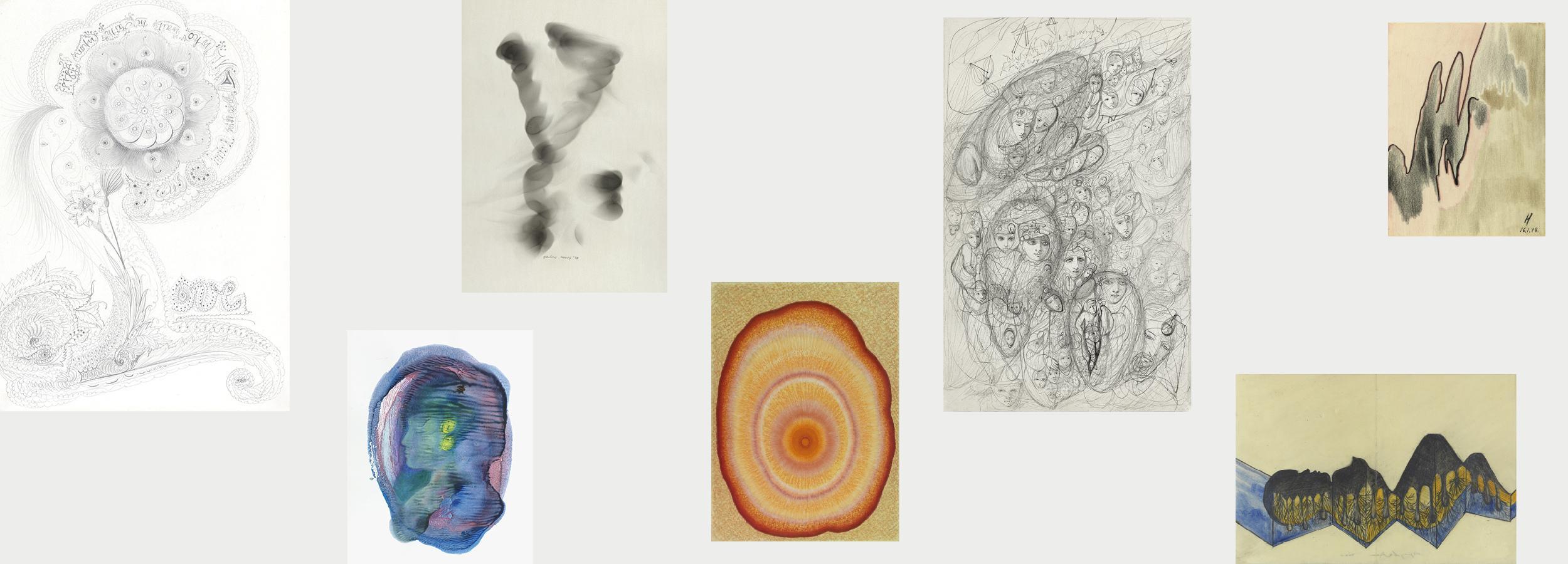
The exhibition included newly acquired works by Ithell Colquhoun, Aleksandra Ionowa, Sidney Manley, Ethel Le Rossignol, Anna Mary Howitt Watts and others alongside the first UK presentation of American visionary artist Paulina Peavy. These are shown in dialogue with works by contemporary artists including Sandra Vásquez de la Horra, Chantal Powell and Samir Mahmood, engaging with themes of spirit communication, ancestral memory, and the energetic connection between the body, Earth, and unseen realms.
Participating artists:
Mary Bligh Bond, Ann Churchill, Ithell Colquhoun, Joseph Crépin, Daniel, Dronma, Nicole Frobusch, Madge Gill, Anna Hackel, Stanislav Holas, Alme Hordijk, Frederick Hudson, Aleksandra Ionowa, Louise Janin, Freda Köhler, Augustin Lesage, Susan MacWilliam, Cara Macwilliam, Samir Mahmood, Sidney Manley, Margot, Cecilie Marková, Allen Moore o2o, Alice Essington Nelson, Heinrich Nüsslein, Paulina Peavy, František Jaroslav Pecka, Alice Pery, PIC, Chantal Powell, Victoria Rance, Arild Rosenkrantz, Ethel Le Rossignol, Victorien Sardou, Austin Osman Spare, Sarah Sparkes, Shannon Taggart, Mimei Thompson, Sandra Vásquez de la Horra, Anna Mary Howitt Watts, Ethel Annie Weir, Ariela Widzer, among others.
The Medium is the Message was curated by Jacqui McIntosh, Curator & Archivist at The College of Psychic Studies.
Join our newsletter to keep in touch with The College of Psychic Studies.