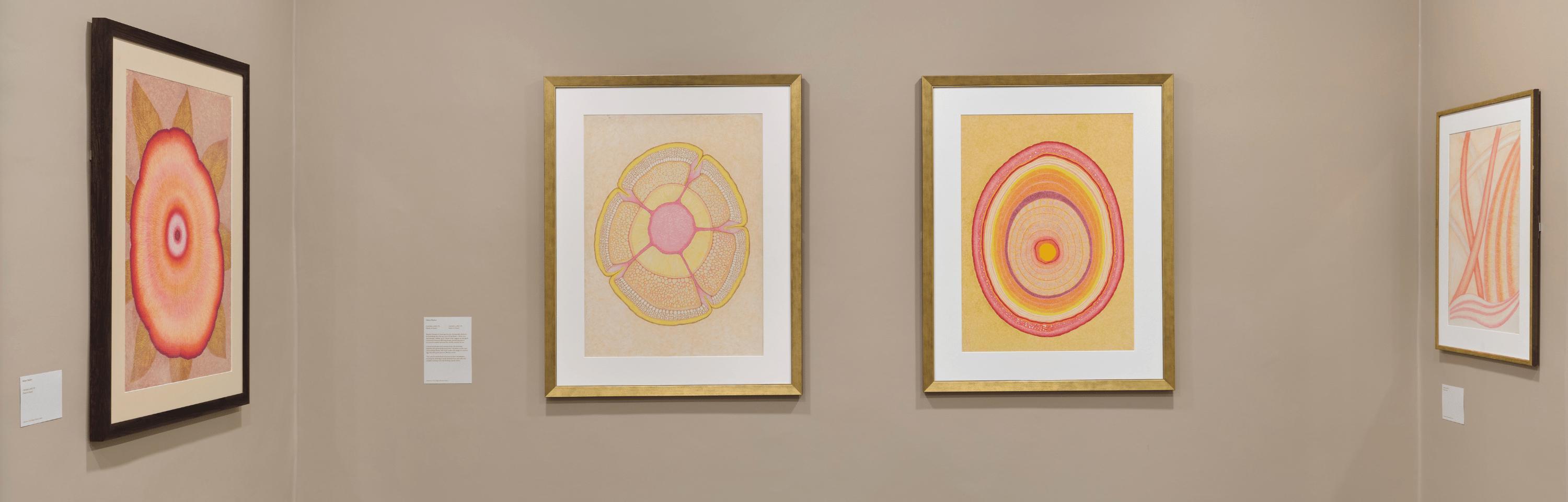
Sidney Manley (1900–1970) was a structural engineer and healer who, despite initial scepticism toward Spiritualism, began automatic writing and drawing in 1946 after visiting a medium. Without formal artistic training, his works emerged spontaneously under the guidance of spirit entities. His earliest pieces—faces and landscapes—were rendered in pencil on paper. By the 1960s, new spirit influences introduced materials such as coloured pencil, oil pastel, charcoal, and clay. Manley worked in a detached state rather than a trance, noting: 'The more successful I am in detaching my mind... the better will be the result.' His creative process was unpredictable, marked by bursts of intense activity followed by long periods of pause. As a healer, he viewed himself not as the source of healing but as a channel for energy.
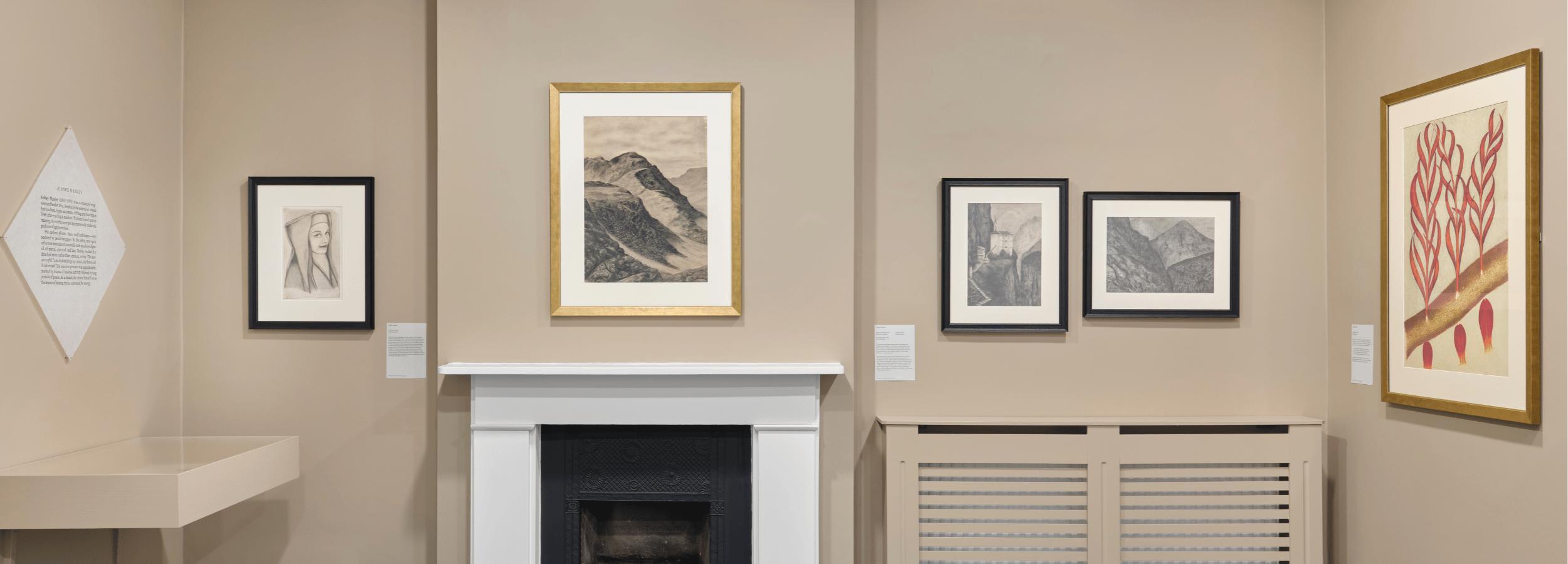
Sidney Manley's earliest drawings were of faces and landscapes, often rendered naïvely—without knowledge of academic drawing techniques. These works reveal fragmented glimpses of pyramids and strange forms which, when pieced together, suggest a larger, surreal landscape—a window into another world (below, left). This compositional approach—creating individual works in isolation, unaware of the larger picture they would form—is echoed in his later series of mountainous landscapes, above, centre.
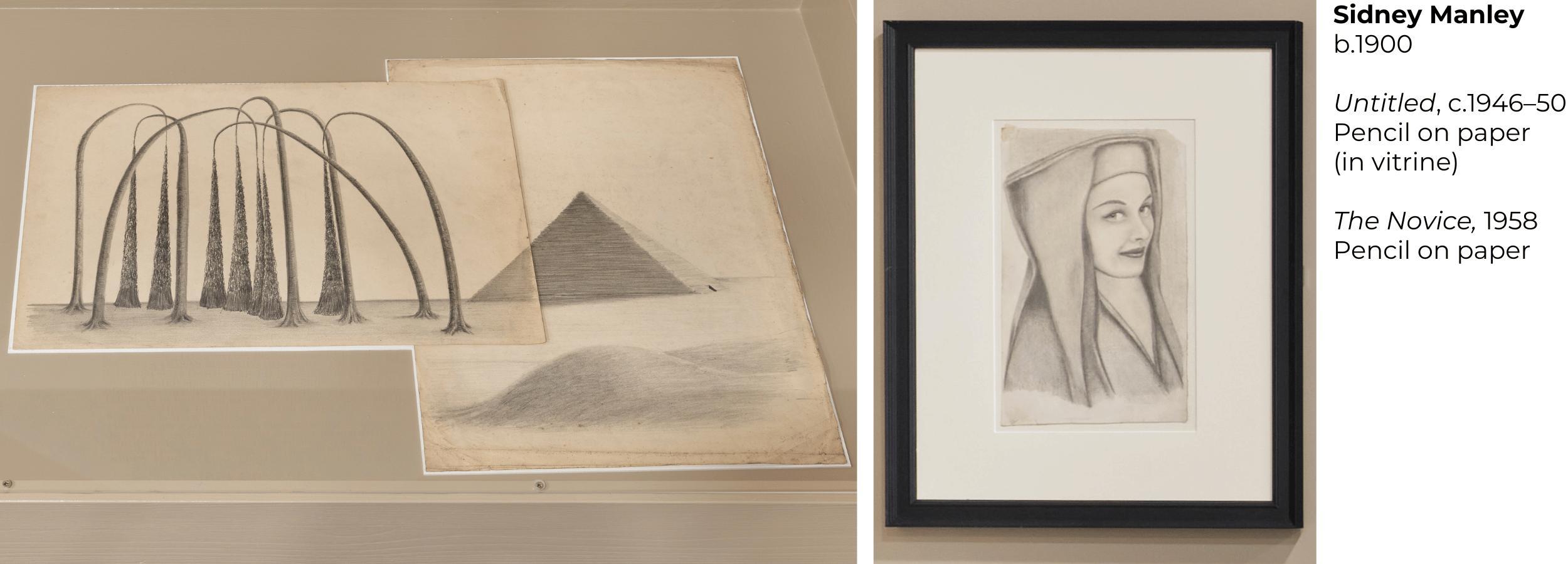
The Novice (above, right) depicts a nun—Manley's spirit guide from an unidentified order—who influenced his work during the late 1950s and 60s. Her arrival marked a sudden shift in the intensity and artistic skill of his practice. Manley worked without preparatory sketches and had no prior knowledge of how his drawing might unfold, or which materials would be used. Works like this often began with the drawing of a single eye, from which the image unfolded automatically. Under the nun's guidance, he produced numerous portraits and landscapes. Though not made in trance, Manley described a personal detachment during the process, allowing the work to emerge through her influence.
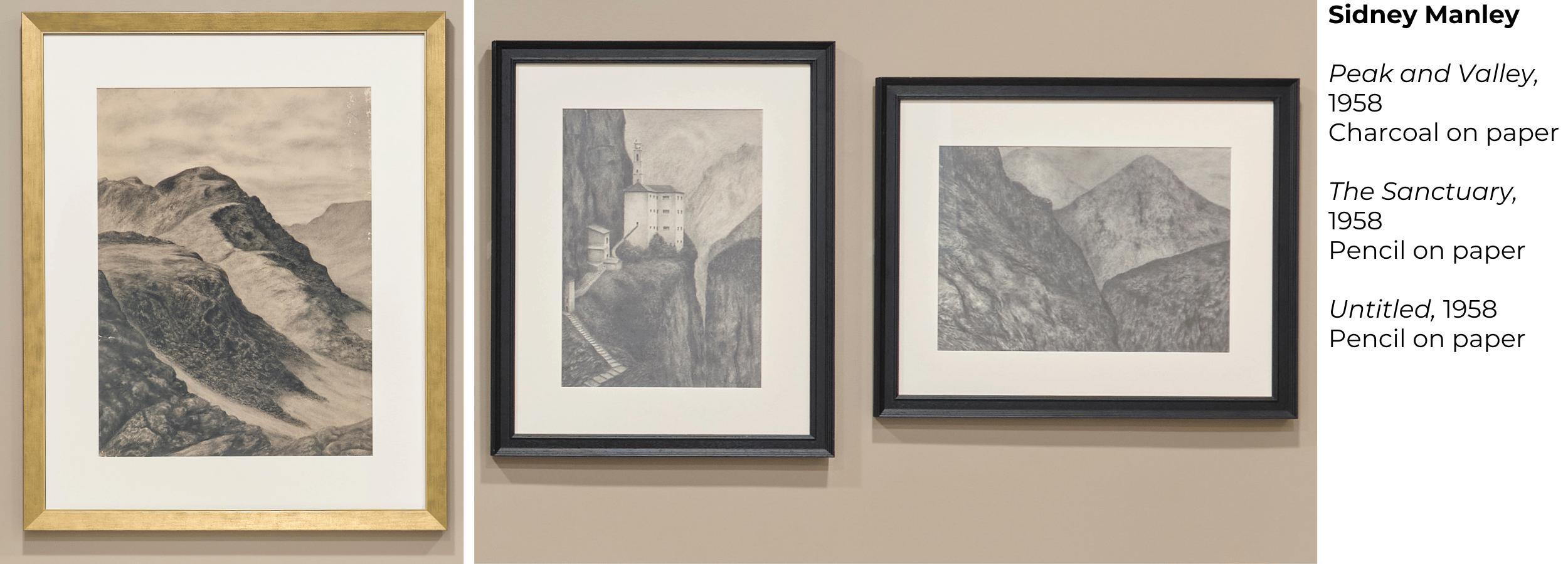
These three drawings (above) emerged under the influence of Manley's spirit guide—a nun from an unidentified order. Each depicts a dramatic mountainous landscape, and in one, a convent is nestled high among the peaks. Together, the series forms a vast, elevated world—a continuous, difficult-to-traverse terrain. The landscapes are evocative of Black Narcissus (1947), Michael Powell and Emeric Pressburger's film set in a Himalayan convent, where isolation and religious intensity give rise to psychological and spiritual crisis. While Manley's works share the film's heightened atmosphere, they evoke a different kind of threshold space—where earthly terrain meets unseen realms. The convent becomes a symbol of inner retreat and spiritual discipline, reachable only through a long, arduous journey.
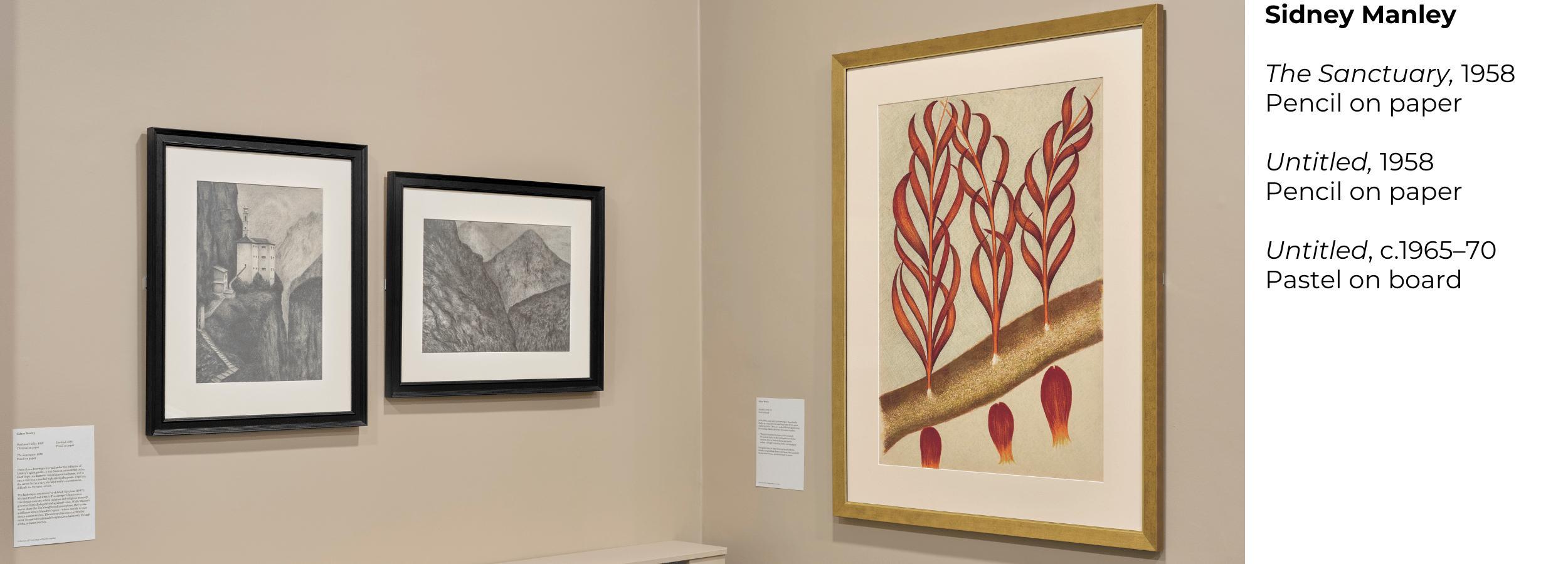
In the 1960s, a new spirit guide emerged—described by Manley as a masculine force and believed to be the spirit of a former artist. These new works followed a period away from making. Manley described his creative rhythm: 'The general pattern has been to draw intensely for a period of a few weeks to the exclusion of other interests, then an interval of some six months without a thought to drawing, before starting again.' During this time, he began drawing botanical forms. Initially recognisable as flowers and fauna, these gradually became more abstract and microscopic in nature.
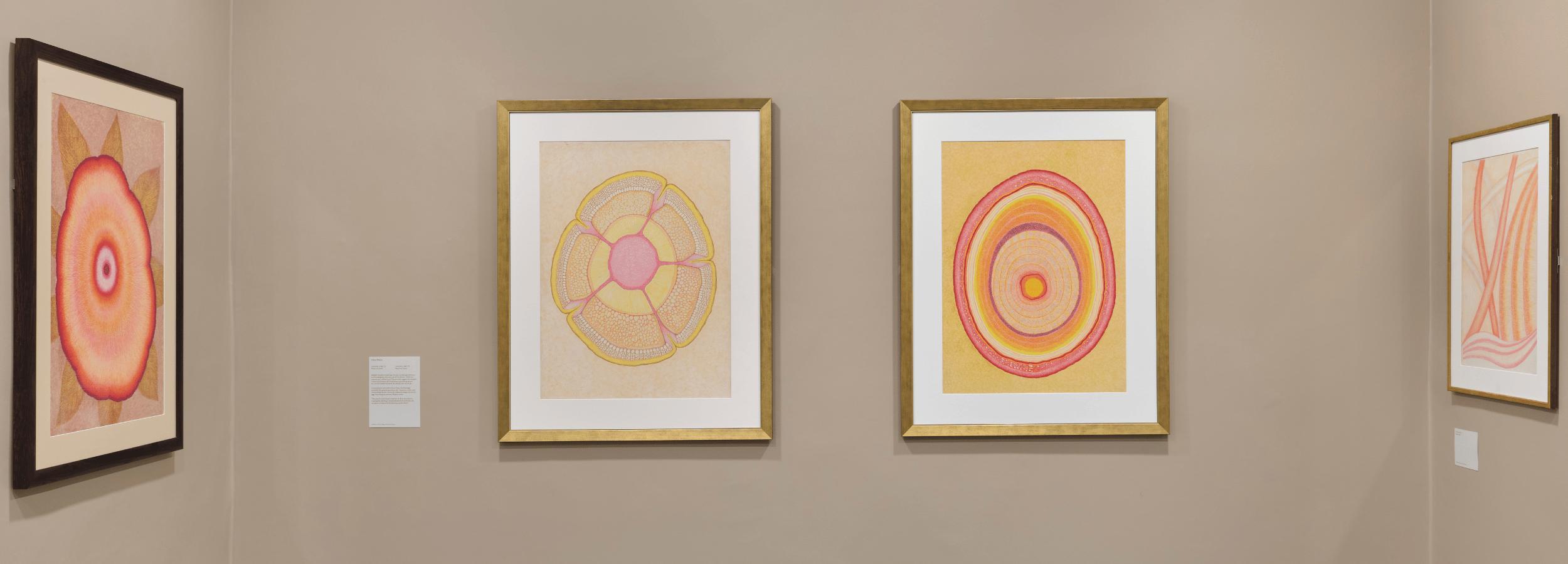
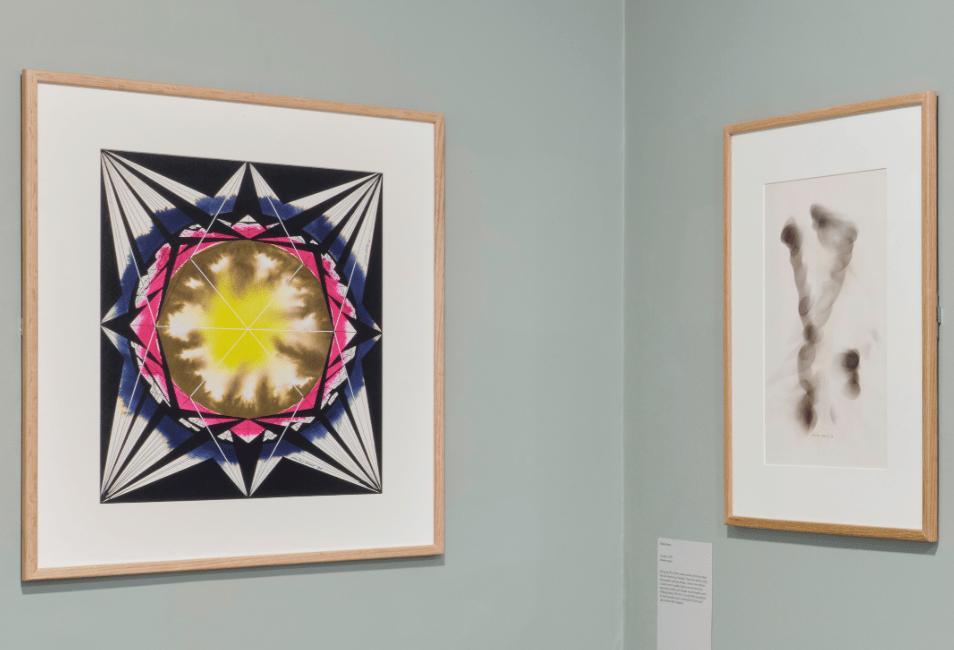
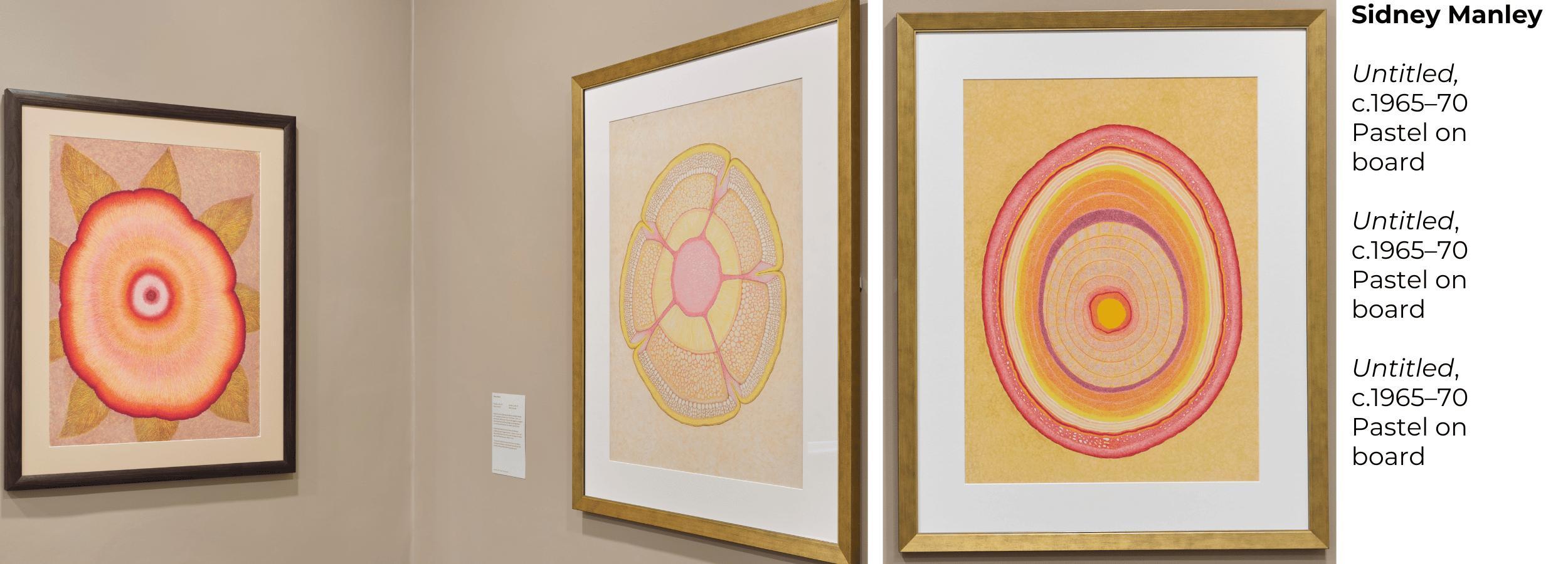
Manley's botanical drawings became increasingly abstract, as if zooming into the very core of the flower—down to a microscopic, cellular level. These works suggest an energetic connection between all living things, presenting nature as a sacred conduit between the earthly and the divine. Created slowly and with intense focus, the drawings resemble life-generating structures—stamens, ovules, and microcellular forms. One work evokes the image of a tantric egg (below, right). Describing his process, Manley wrote: 'The pencil is motivated crosswise in short movements... rotating the drawing to work inwards from each side and includes working with the drawing upside-down.'
A huge collection of drawings, paintings and sculptures by Sidney Manley was donated to The College of Psychic Studies in 2022 by his son, Chris Manley. Chris passed away shortly after he offered us this gift, and we feel honoured to be the custodians of such a collection. We hope Chris Manley's daughter Beth & her son Seb - Sid's granddaughter & great-grandson - enjoyed the show.
Photos: Eva Herzog. Artworks: Collection of The College of Psychic Studies.
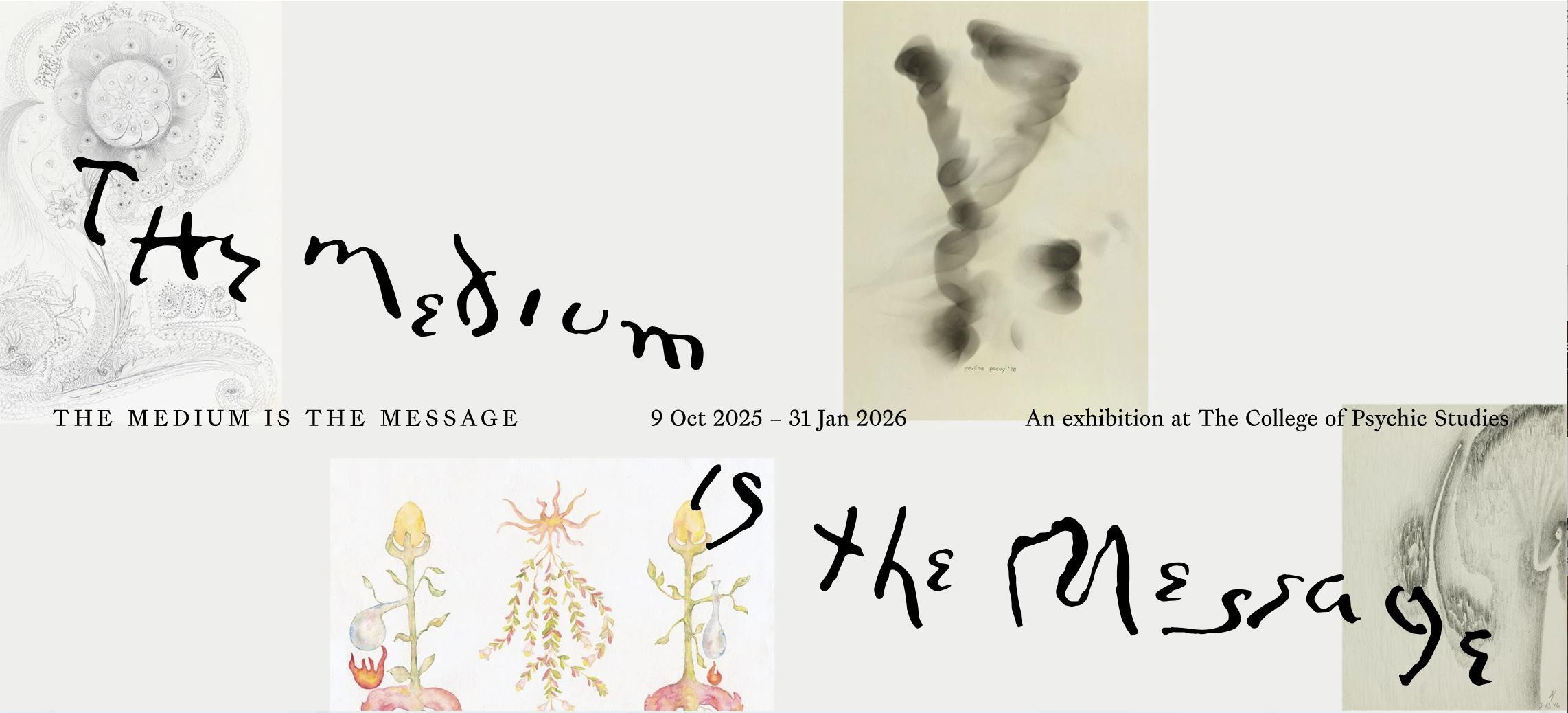
The Medium is the Message, 9 October 2025 –31st January 2026, was a major exhibition that explores the rich and complex relationship between artistic practice and mediumship.
Marking the centenary of The College of Psychic Studies' move to its historic home at 16 Queensberry Place in 1925, the exhibition spanned four floors and featured over 100 artworks alongside rare archival materials. It brought together more than 30 artists from the mid-19th century to the present day, examining how artists have visualised supernatural connection and imagined radical futures shaped by the ghostly and the unseen.
The Medium is the Message considered the artist as a channel between worlds – as a receiver of visions, energies and ideas. It highlighted the enduring role of mediumship within the College's history, with particular focus on the vital contributions of women – as artists, mediums, and feminist visionaries.
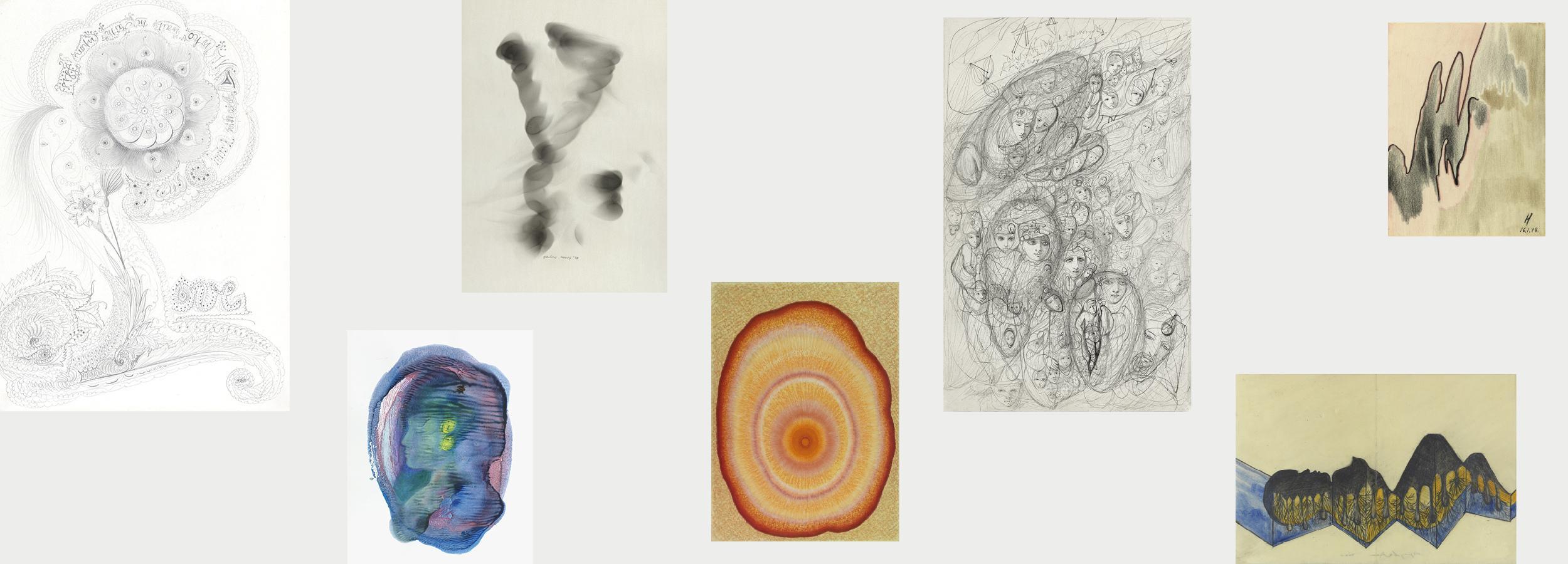
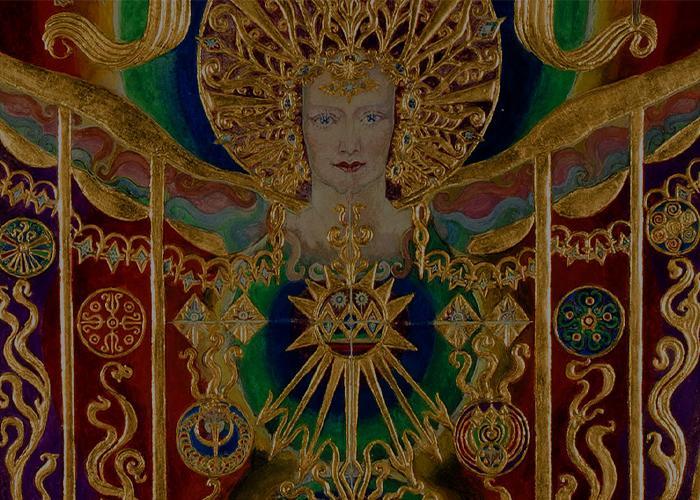
The exhibition included newly acquired works by Ithell Colquhoun, Aleksandra Ionowa, Sidney Manley, Ethel Le Rossignol, Anna Mary Howitt Watts and others alongside the first UK presentation of American visionary artist Paulina Peavy. These are shown in dialogue with works by contemporary artists including Sandra Vásquez de la Horra, Chantal Powell and Samir Mahmood, engaging with themes of spirit communication, ancestral memory, and the energetic connection between the body, Earth, and unseen realms.
Participating artists:
Mary Bligh Bond, Ann Churchill, Ithell Colquhoun, Joseph Crépin, Daniel, Dronma, Nicole Frobusch, Madge Gill, Anna Hackel, Stanislav Holas, Alme Hordijk, Frederick Hudson, Aleksandra Ionowa, Louise Janin, Freda Köhler, Augustin Lesage, Susan MacWilliam, Cara Macwilliam, Samir Mahmood, Sidney Manley, Margot, Cecilie Marková, Allen Moore o2o, Alice Essington Nelson, Heinrich Nüsslein, Paulina Peavy, František Jaroslav Pecka, Alice Pery, PIC, Chantal Powell, Victoria Rance, Arild Rosenkrantz, Ethel Le Rossignol, Victorien Sardou, Austin Osman Spare, Sarah Sparkes, Shannon Taggart, Mimei Thompson, Sandra Vásquez de la Horra, Anna Mary Howitt Watts, Ethel Annie Weir, Ariela Widzer, among others.
The Medium is the Message was curated by Jacqui McIntosh, Curator & Archivist at The College of Psychic Studies.
Join our newsletter to keep in touch with The College of Psychic Studies.